Tuesday, May 21, 2013

Soren Kierkegaard Turns Two Hundred

Soren Kierkegaard
If your soul has bunions, however, reading Kierkegaard may inflame them: he invented self-doubt in its modern form. “Either/Or,” for example, ought really to be subtitled “Neither.” Kierkegaard, who has often been called the father of existentialism, champions the examined life, and the conscious choice that informs it—yet he mocks choice as futile. “I see it all perfectly,” he wrote. “There are two possible situations—one can either do this or that. My honest opinion and my friendly advice is this: do it or do not do it—you will regret both.”
Soren Kierkegaard Turns Two Hundred : The New Yorker

Why isn't there more progress in philosophy?

A talk given by David Chalmers (ANU, NYU) at the Moral Sciences Club of the Faculty of Philosophy on 7th May 2013.

Video & Audio: Why isn't there more progress in philosophy?

Sunday, May 19, 2013

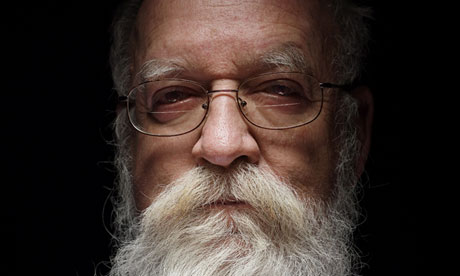
Daniel Dennett's seven tools for thinking

Daniel Dennett
Cognitive scientist and philosopher Daniel Dennett is one of America's foremost thinkers. In this extract from his new book, he reveals some of the lessons life has taught him.

  1. Use you mistakes
  2. Respect your opponent
  3. The "surely" klaxon
  4. Answer Rhetorical Questions
  5. Employ Occam's razor
  6. Don't waste your time on rubbish
  7. Beware of deepities

Read about it: Daniel Dennett's seven tools for thinking

Friday, May 10, 2013

Edouard Machery Interview

Edouard Machery
Interview with philosopher Edouard Machery.
Edouard Machery is a killer cool philosopher working on the cutting edge of interfaces between analytic philosophy, psychology, xphi and cognitive science. He’s a continental doing analytic philosophy who thinks philosophy without science is blind. He’s always investigating social phenomena like racism and the ‘integration challenge’, alongside the nature of concepts and whether they are the same as perceptual representation. This month he’ll be going head to head with the chillin’ blue-haired philosopher Jesse Prinz in Latvia on this very issue. He thinks concepts aren’t a natural kind and kind of thinks that studying them is like studying a science of Tuesdays. He’s also brooding on what the folk think and whether experts have judgements that can be trusted, suggesting that philosophy needs to be humble. Everything he does goes to the heart of how we think about ourselves and all in all is one hell of a badass groove. Shakin’.
without concepts » 3:AM Magazine

Tuesday, May 07, 2013

The Philosophy of Kierkegaard

Soren Kierkegaard
A 1984 documentary on existentialist philosopher Soren Kierkegaard.
Danish philosopher Søren Kierkegaard—often considered the first existentialist—was born 200 years ago this past Sunday in Copenhagen. Writing under pseudonyms like Johannes Climacus and Johannes de Silentio, Kierkegaard attacked both the idealism of contemporary philosophers Hegel and Schelling and the bourgeois complacency of European Christendom. A highly skilled rhetorician, Kierkegaard preferred the indirect method, deploying irony, ridicule, parody and satire in a paradoxical search for individual authenticity within a European culture he saw as beset by self-important puffery and unthinking mass movements.
The Philosophy of Kierkegaard, the First Existentialist Philosopher, Revisited in 1984 Documentary | Open Culture

Saturday, May 04, 2013

Why Study Philosophy?

Why study philosophy? It prepares you for well-paying jobs. It's interesting. It's great preparation for law school, business school or graduate school. The USC philosophy department has gathered some interesting data.

Undergraduate > School of Philosophy

Wednesday, May 01, 2013

Daniel Dennett, ‘Intuition Pumps and Other Tools for Thinking’

Dan Dennett
Dan Dennett has written a new book about thought experiments, imagination, and the art of doing philosophy.
“Philosophers are infamous for being navel-gazers, but a lot of them are remarkably unreflective about their own methods.” He added, “If you do get a little self-conscious, it opens up so many weak spots and helps you think.”
Daniel Dennett, Author of ‘Intuition Pumps and Other Tools for Thinking’

Monday, April 29, 2013

Ethics and the Limits of Evolutionary Psychology

Interesting essay on the state of naturalized ethics and the influence of evolutionary psychology.

"Wittgenstein sums this up for us: 'if I want to fix my mind on what I mean by absolute or ethical value…I wonder at the existence of the world.'"

IASC: The Hedgehog Review - Volume 15, No. 1 (Spring 2013) - Ethics and the Limits of Evolutionary Psychology - Thomas de Zengotita

Wednesday, April 17, 2013

the possible worlds hedgehog

Philosopher Robert Stalnaker is interviewed at 3amMagazine.
Robert Stalnaker is the grandmaster flash of contemporary metaphysicals. He thinks that a language-first approach to philosophy is ludicrous, Paul Grice an inspiration and Saul Kripke very important to his early thinking. He broods on issues about internalist and externalist doctrines and approaches, on our knowledge of the external world, about the nature of phenomenal knowedge, about the view from nowhere, the opacity of transparency, contextualism, relativism, possible worlds, the entanglement of semantics with metaphysics, haecceitism and the beauty of metaphysical theories, amongst other things. He is currently on a phased retirement at MIT and becoming a Visiting Professor at Columbia. He is simply a modern daddy of the mac!Chillin’!
the possible worlds hedgehog » 3:AM Magazine

Monday, April 01, 2013

On the benefits of a philosophy major

Philosophy majors are regularly exposed to critical thinking and analysis. They have skills that make them very attractive on the job market.
Thus it is not a surprise (at least to me!) that philosophy majors are some of the best with regard to analytical skills, evidenced by the above graphic. According to the Educational Testing Service, which administers the GRE, the analytic writing section tests “critical thinking and analytical writing skills. It assesses [your] ability to articulate and support complex ideas, construct and evaluate arguments, and sustain a focused and coherent discussion.” Philosophy majors are also the best with regard to verbal ability, and the best of the liberal arts students at quantitative reasoning. Simply put, our students have the best all-around intellectual skills.
On the benefits of a philosophy major | Pleas and Excuses

Monday, March 25, 2013

The Ironic Success Of Experimental Philosophy

What is experimental philosophy? They are getting a lot of press and making some interesting observations.
Practitioners of experimental philosophy ("X-Philes") are a heterogeneous bunch, but most believe that there are important limitations to philosophy's dominant "armchair" methods of reflection and argumentation, prompting the adoption of a burning armchair as a logo (you can hear the accompanying anthem, sung by Alina Simone, on YouTube). To explore and remedy these limitations, they have turned to psychological research on people's judgments, feelings and behaviors. Some of them conduct this research themselves; others collaborate with social scientists or draw upon their work.
The Ironic Success Of Experimental Philosophy : 13.7: Cosmos And Culture : NPR

Tuesday, March 19, 2013

Philosophers' Cafe: The Nature of Information

From Plato's Forms to IRS forms. From Aristotle's Essences to DNA. From Hume's ideas to symbolic AI. From sense data to databases. From carnivores to informavores. It's all about information. 

We are said to live in an information age in which corporations and governments collect all kinds of information about each of us. We dispense information from information booths, place it on maps and in brochures, report it in newspapers and on the evening news, and pick it up in classrooms and around dinner tables. What is this idea?


Join us Friday, March 22, from 3:00-4:00 in GH 316 for the Philosophers' Cafe. We are going to talk about the nature of information.

Friday, March 15, 2013

Double Majors Produce Dynamic Thinkers


As reported in the Chronicle of Higher Education, a study finds that double majors produce more dynamic thinkers. The philosophy major at NKU requires only 30 hours, which means many students take a second major. The article below highlight integration and creativity as benefits to pursuing two (or more) majors.
An undergraduate education is traditionally supposed to provide students with both breadth and depth of knowledge, which derive from their general-education requirements and major, respectively. 
Increasingly, education experts also want students to develop a third skill, integrative thinking. It entails learning the deeper, underlying meaning of a discipline, making connections across courses and subjects, and applying different intellectual perspectives. Even better, some researchers say, is creative thinking, in which students master multiple disciplinary approaches to generate fresh and original ideas. 
Students who major in two fields are more apt than their single-majoring peers to think both integratively and creatively, according to a new study. But they achieve those goals largely on their own, often despite the obstacles put in their way by academe. 

Thursday, March 14, 2013

A philosopher in the age of science

Hilary Putnam
An article about philosopher Hilary Putnam, who has just released a collection of essays, Philosophy in the Age of Science.
Like Russell, Putnam began his philosophical career working on topics concerning logic and mathematics. In the 1960s his work with three other mathematicians led to the solution of Hilbert’s Tenth Problem, and his work with Martin Davis led to the creation of an algorithm about satisfiability for first-order predicate logic. Like William James, Putnam has a keen eye for where lofty philosophical notions such as truth, knowledge, value, and justification can be related to pragmatic concerns about use and practicality. And like James and Russell, Putnam sees both science and philosophy as participating in a similar project of refining our conception of reality. Sadly Putnam has never enjoyed a similar level of fame or public influence, though his famous essay “Brain in a Vat” may have been one of the inspirations behind The Matrix, a film which introduced philosophical scepticism to a whole new audience.
... A Kant without hubris, a Wittgenstein without quietism, an unrelenting critic, gadfly and deeply original thinker, Putnam is one of the 20th century’s true philosophical giants."
A philosopher in the age of science

Brief encounter with the mysterian

Colin McGinn
Colin McGinn is a mysterian--he believes that some problems in philosophy will not, and cannot, be explained by human minds. He is interviewed on 3:AM Magazine.
Colin McGinn has no time for interviews because he’s too busy writing his books, practicing his backhand and doing the philosophical stuff – but even so he took time out for a swift fly-past for the benefit of 3:AM Magazine. He’s funny, caustic and a guy who reckons he has the measure of what needs to be said and done. His blog is an evergreen provocation and he’s not out to make friends but to keep the controversies hot. Best thing to do is to read the damn books I guess. His is the kick-ass obloquy done in the high-handed Swiftian style. Raw!
Brief encounter with the mysterian » 3:AM Magazine

Wednesday, March 13, 2013

Mary and the Zombies: Can Science Explain Consciousness?

We will talk about these issues (and more) in PHI 345 Philosophy of Mind next fall.
We trust science because its claims are based on experience. But experience itself is a subjective reality that seems to elude the objectivity of scientific understanding. We know that our experiences—of seeing red, feeling pain, falling in love and so forth—depend on physical systems like the brain that science can, in principle, exhaustively explain. But it’s hard to make sense of the idea that experiences themselves could be physical. No doubt experiences correlate with objective physical facts, but, as subjective phenomena, how could they be such facts? When I feel intense pain, scientists may be able to observe brain-events that cause my pain, but they cannot observe the very pain that I feel. What science can observe is public and objective; what I feel is private and subjective.
Mary and the Zombies: Can Science Explain Consciousness? - NYTimes.com

Thursday, March 07, 2013

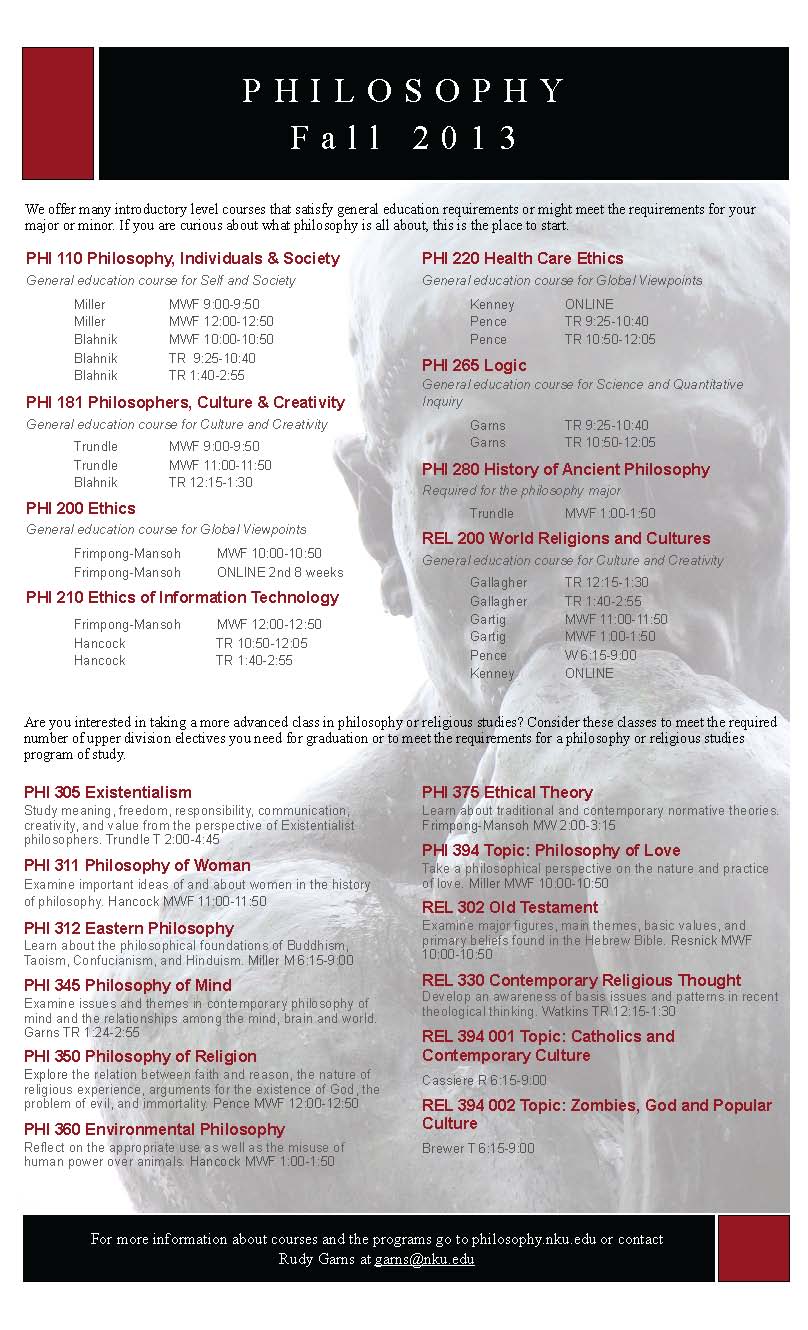
Fall 2013 Schedule

Our PHI / REL fall 2013 schedule is here. In the fall we offer our usual array of lower division general education classes as well as a variety of upper division elective and required courses. You are sure to find something that interests you.

Tuesday, March 05, 2013

Film and Philosophy: A.I.

The Film and Philosophy series will screen and discuss Steven Spielberg's A.I. This Friday, March 8, from 3:00-6:00 in the Digitorium. See just how much a robot boy can feel love and abandonment (not to mention despair and angst).

Wednesday, February 27, 2013

Immanuel Kant and his Man-Servant Lampe

Very interesting blog on the end of Kant's life and his relationship to his man-servant, Lampe. Most of the information comes from Ehregott Andreas Wasianski's 1804 work, Immanuel Kant in seinen letzten Lebensjahren.
Wasianski pauses to describe the relationship between the two in some detail. He considers it important to do so, since Kant and Lampe had a falling out two years before the philosopher's death. The nature of the dispute is not entirely clear from what Wasianski is willing to report of it, but it leads to the servant's dismissal, in 1802, and inaugurates the period of Kant's decline and eventual death two years later.
Immanuel Kant and his Man-Servant Lampe - Justin Erik Halldór Smith

Monday, February 25, 2013

Can pills change our morals?

Molly Crockett
Could we change the way people respond to moral situations by manipulating their brain chemistry with antidepressant pills? Molly Crockett is a neuroscientist investigating this question.
It seems that if we can just wrap our heads around the idea that peoples’ attachment to their ideals is not fixed, but can change, we’re more likely to listen to each other. It’s unclear whether we will ever be able to create a “morality pill”—in part because we have yet to reach consensus on what is “moral” in the first place.4 And we still have a long way to go before we fully understand how brain chemistry shapes moral judgment and behaviour.5 But preliminary work suggests we ought to cultivate a healthy skepticism towards our own sense of right and wrong – it may well be vulnerable to factors below our awareness and beyond our control.
Can pills change our morals? | thInk

Sunday, February 24, 2013

Bertrand Russell on science, education and democracy

Bertrand Russell
Bertrand Russell contends that "science education — something that leaves much to be desired nearly a century later — is key to attaining a future of happiness and democracy." In his 1926 book Education and the Good Life Russell writes about the good life, science, democracy and the importance of education.

For the first time in history, it is now possible, owing to the industrial revolution and its byproducts, to create a world where everybody shall have a reasonable chance of happiness. Physical evil can, if we choose, be reduced to very small proportions. It would be possible, by organization and science, to feed and house the whole population of the world, not luxuriously, but sufficiently to prevent great suffering. It would be possible to combat disease, and to make chronic ill-health very rare. … All this is of such immeasurable value to human life that we dare not oppress the sort of education which will tend to bring it about. in such an education, applied science will have to be the chief ingredient. Without physics and physiology and psychology, we cannot build the new world.

Bertrand Russell on human nature, construction vs. destruction, and science as a key to democracy | Brain Pickings

Wednesday, February 20, 2013

Philosophers' Cafe Topic: Gun Violence

“Gun Violence: A Philosophical Debate” is our topic at the next Philosophers' Cafe. Friday, February 22, 3:00-4:00 in GH 316.

Friday, February 15, 2013

Consciousness Conference Online

Are you  interested in the philosophy of mind and the nature of consciousness? You might want to check out this online conference. It begins February 15 at noon. You can browse the papers and the comments, including the activity from previous conferences.
The conference begins on the third Friday in February and runs for two weeks (that being ‘the conference’). Those presenters who allow it have their papers posted online at least a week before the conference begins so that people can read as many papers, in as much detail, as they choose beforehand to enhance and deepen discussion. During this two weeks discussion takes place in the comments section of each session (i.e. each post). It is much like blogging, only during a specific two week period. As such it can be done from anywhere at any time! After the conference the comments section will be closed (unless requested to be left open by author). Presentations, videos, papers, etc and discussion are left for people to view (unless the presenter requests otherwise) but no new comments are approved.
Consciousness Online

Was Jane Austen a Moral Philosopher?

Was Jane Austen a moral philosopher? Thomas Rodham thinks so. 
Jane Austen (1775-1817) wrote delicious romantic comedies about middle-class girls looking for good husbands among the landed gentry of Regency England. But if that were all there was to it we wouldn’t take her any more seriously now than the genre hacks published by Mills and Boon. What’s so special about her novels that we are still reading them today? It’s not just their literary quality. Austen was also a brilliant moral philosopher who analysed and taught a virtue ethics for middle-class life that is surprisingly contemporary. Appreciating this can help us understand why she wrote the way she did, and how and why we should read her today.
Reading Jane Austen as a Moral Philosopher | Issue 94 | Philosophy Now

Thursday, February 14, 2013

Ronald Dworkin

Ronald Dworkin
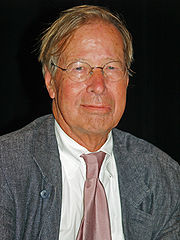
The legal philosopher and scholar Ronald Dworkin passed away at age 81. Dworkin made important contributions to the philosophy of law and political philosophy.
His theory of law as integrity, in which judges interpret the law in terms of consistent and communal moral principles, especially justice and fairness, is amongst the most influential contemporary theories about the nature of law. He advocates a "moral reading" of theUnited States Constitution,[4] and an interpretivist approach to law and morality. (Wikipedia)

Sunday, February 10, 2013

Saturday, February 02, 2013

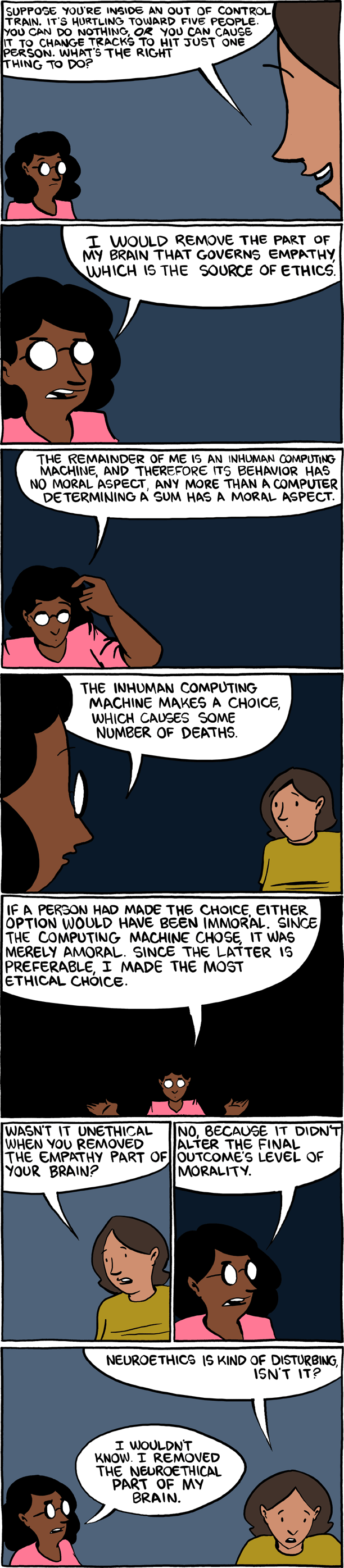
Should You Kill The Fat Man?

Try this thought experiment at The Philosopher's Magazine:
This activity is a treatment of some of the issues thrown up by a thought experiment called 'The Trolley Problem', which was first outlined by the philosopher Philippa Foot, and then developed by Judith Jarvis Thomson and others. But before we start properly, we need to ask you four preliminary questions so we get a sense of the way that you think about morality.
Should You Kill The Fat Man?

Friday, February 01, 2013

Minority Report

The Film and Philosophy series will screen and discuss Steven Spielberg's Minority Report on Friday, Feb. 8, from 3:00-6:00 in the Digitorium. Please join us!
For more information about the film see:

Thursday, January 31, 2013

Philosophy Student Conference

Fifth Annual Philosophy Student Conference

This is the call for papers for the fifth annual Philosophy Student Conference at the University of Georgia. The conference will be held at Peabody Hall, University of Georgia, Room 115 on Saturday, March 30th. (phone(706)-542-2823). The deadline for submissions is March 9th. Following the deadline, all submissions will be reviewed and selections will be made, with notifications sent to all no later than Saturday, March 16th, 2012. It is the committee's intent to accommodate as many of the student papers submitted as possible. Papers will be followed with discussion.

Paper Submission Guidelines:
  • The colloquium is open to any undergraduate student. Papers submitted can be on any topic of serious philosophical concern and are to be between a minimum of 1, 500 words and a maximum of 3,000 words.
  • Please prepare paper for blind review. Include cover letter and provide no identifying information in paper.
Submissions should be sent by e-mail attachment (word document) to:
ugaphilosophyclub@gmail.com

Phi Sigma Tau-University of Georgia Chapter

An Interview with Philosopher Hilary Kornblith

3:AM: What made you become a philosopher? Has it turned out to be what you imagined? 
Hilary Kornblith
Hilary Kornblith: When I was in high school, I read a lot of existentialist novels and plays – Dostoevsky, Camus, Sartre – and I went on from there to read Nietzsche and some of Sartre’s essays and Being and Nothingness. When I got to college, I planned to be a math major, and, in addition to signing up for some math courses, I decided to take some philosophy. Quite by chance, I took a philosophy of science course in which the entire semester was devoted to reading Locke’s Essay. I was hooked. For the next few semesters, I took nothing but philosophy and math courses, and it wasn’t long before I realised that it was the philosophy that really moved me. I don’t know whether I can say that having a career in philosophy has turned out as I imagined, since in many ways I had little idea of what such a life would be like. But philosophy is still tremendously exciting to me, and the opportunity to think, and talk, and write about these issues has been wonderful.
On reflection: Interview with Hilary Kornblith » 3:AM Magazine

Wednesday, January 30, 2013

The Right to Bear Arms?

Do you have a right to own a gun? Take the poll below.

Be sure to attend our Philosophers' Cafe on February 22 when discuss Gun Violence

Friday, January 18, 2013

The Normal Well-Tempered Mind

Dan Dennett talks about "selfish neurons" and the well-tempered mind.
Dan Dennett
We're beginning to come to grips with the idea that your brain is not this well-organized hierarchical control system where everything is in order, a very dramatic vision of bureaucracy. In fact, it's much more like anarchy with some elements of democracy. Sometimes you can achieve stability and mutual aid and a sort of calm united front, and then everything is hunky-dory, but then it's always possible for things to get out of whack and for one alliance or another to gain control, and then you get obsessions and delusions and so forth. 
You begin to think about the normal well-tempered mind, in effect, the well-organized mind, as an achievement, not as the base state, something that is only achieved when all is going well, but still, in the general realm of humanity, most of us are pretty well put together most of the time. This gives a very different vision of what the architecture is like, and I'm just trying to get my head around how to think about that.
THE NORMAL WELL-TEMPERED MIND | Edge.org

Monday, January 14, 2013

Philosophy Movies

The Film and Philosophy series continues this spring the second Friday of each month at 3:00 in the Digitorium.


Female Philosophers Shake Up Their Field

Philosophy has been slow to change:
Most philosophy departments and conference meetings are still saturated with men. More than 80 percent of full-time faculty members in philosophy are male, compared with just 60 percent for the professoriate as a whole, according to 2003 data compiled by the U.S. Education Department, the latest available.
But it is changing.
Ms. Alcoff [President of the Eastern Division APA] and other women say that despite the overwhelmingly male nature of their discipline, faculty members picked her as president in part because those who vote in the association's elections are more likely than others to endorse change, and because the association's nominating committee assembled a diverse slate of presidential candidates, including a black male and two feminist philosophers. "One of my goals is to increase diversity," Amy Ferrer, the association's new executive director, told The Chronicle.
At NKU about 25% of our majors are female. And only one of our five tenured faculty is female. We have few opportunities to hire new faculty, but we can do more to attract more female majors and minors.  Any suggestions?

We will offer PHI 311 Philosophy of Woman in the fall. Look for it.

Female Philosophers Shake Up Their Field - Faculty - The Chronicle of Higher Education (Firewall)

Wednesday, January 09, 2013

Are Babies Born Good?

"New research offers surprising answers to the age-old question of where morality comes from"


Are Babies Born Good? | Science & Nature | Smithsonian Magazine

Tuesday, January 08, 2013

Knowledge, Innovation, and Integration (in Philosophy)

Here's an interview video we made with Integrative Studies last year. The topics included generating knowledge within philosophy, innovation and integration.


The best books of 2012 from The Philosophers Magazine

There are some good books on this list.
With 2012 safely behind us, we ask TPM’s reviewers to select a favourite book published last year (give or take a few months), taking into account our commitment to the twin virtues of philosophical rigour and readability. As a slightly late stocking stuffer, we offer you this rich, juicy and still mildly festive list of philosophy books which are both illuminating and enjoyable.
The best books of 2012 | The Philosophers Magazine

Sunday, December 30, 2012

Embodied Cognition

Excerpt from  Louder Than Words: The New Science of How the Mind Makes Meaning by Benjamin K. Bergen.
Starting as early as the 1970s, some cognitive psychologists, philosophers, and linguists began to wonder whether meaning wasn’t something totally different from a language of thought [Call it Mentalese, whichtranslates words into actual concepts: a polar bear or speed limit, for instance]. They suggested that—instead of abstract symbols—meaning might really be something much more closely intertwined with our real experiences in the world, with the bodies that we have. As a self-conscious movement started to take form, it took on a name, embodiment, which started to stand for the idea that meaning might be something that isn’t distilled away from our bodily experiences but is instead tightly bound by them. For you, the word dog might have a deep and rich meaning that involves the ways you physically interact with dogs—how they look and smell and feel. But the meaning of polar bear will be totally different, because you likely don’t have those same experiences of direct interaction.
See more of this excerpt in Scientific American, Embodied Cognition: Our Inner Imaginings of the World Around Us Make Us Who We Are [Excerpt]

Saturday, December 29, 2012

Thursday, December 27, 2012

David Lewis on Philosophy

David Lewis
Our “intuitions” are simply opinions: our philosophical theories are the same. Some are commonsensical, some are sophisticated; some are particular; some general; some are more firmly held, some less. But they are all opinions, and a reasonable goal for a philosopher is to bring them into equilibrium. Our common task it to find out what equilibria there are that can withstand examination, but it remains for each of us to come to rest at one or another of them…
      Once the menu of well-worked out theories is before us, philosophy is a matter of opinion. Is that to say that there is no truth to be had? Or that the truth is of our own making, and different ones of us can make it differently? Not at all! If you say flatly that there is no god, and I say that there are countless gods but none of them are our worldmates, then it may be that neither of us is making any mistake of method. We may each be bringing our opinions to equilibrium in the most careful possible way, taking account of all the arguments, distinctions, and counterexamples. But one of us, at least, is making a mistake of fact. Which one is wrong depends on what there is (Collected Papers, Vol. 1, 1983: x-xi). 

Saturday, December 01, 2012

Fall Philosophy Reception

We want to invite all NKU philosophy majors and minors, and friends of the program, to a fall celebration of student achievement, when we we acknowledge our graduating seniors and inductees into Phi Sigma Tau, the philosophy honor society. Stop by LA 203 on Wednesday, December 5, between 3:00 and 5:00. Refreshments and great conversation.


Philosophers' Cafe

Thanks to everyone who came out to the Philosophers' Cafe yesterday. Great discussion.


Sunday, November 25, 2012

Plantinga Reviews Nagel


Alvin Plantinga reviews Thomas Nagel's new bookMind and Cosmos: Why the Materialist Neo-Darwinian Conception of Nature is Almost Certainly False. Nagel criticizes Materialism, Naturalism and Neo-Darwinism, but doesn't--Plantinga sadly points outs--endorse Theism.

Tuesday, November 13, 2012

Cafe: Moral Knowledge

Join us for the Philosophers' Cafe on Friday, November 30, from 3:00-4:00 in GH 316. Our topic will be moral knowledge. How do we know right from wrong? Is it learned or innate?

Sunday, November 04, 2012

Solaris

The Friday, Nov. 9, Film and Philosophy series will present Steven Soderbergh's film Solaris. 3:00-6:00 in the Digitorium. Please join us for a great film and discussion.


Saturday, October 20, 2012

Philosophy Schedule for Spring 2013

The class schedule for spring 2013 is available. Registration begins in November.


ERGO Tournament

Join the NKU Philosophy Club for an ERGO tournament Friday, October 26 starting at 3:00 in GH 316.

...a great game, highly recommended for scientists, philosophers and closet geeks. boardgamegeek.com

A fun romp and definitely one for the gray matter in us all. -boardgamegeek.com

_Ergo is the logical card game for the geek in all of us. Each player plays a variable (A, B, C, or D) and uses familiar logical operators like Not, And, Or, If-Then to prove they exist, and that their opponents don't! Along the way, watch out for cards that will shift the equation like Wild Cards, Tabula Rosa or the dreaded Fallacy card.Each Player takes turns creating and changing the four premises of the proof to make true statements. Watch out though, when someone plays the Ergo card, whoever is true scores! _ - trollandtoad.com

Jean-Paul Sartre's Blog

What if Jean-Paul Sartre had a blog?

Sunday, 12 July, 1959: 9:55 A.M.An angry crow mocked me this morning. I couldn’t finish my croissant, and fled the café in despair.
The crow descended on the croissant, squawking fiercely. Perhaps this was its plan.
Perhaps there is no plan.

Jean-Paul Sartre's Blog : The New Yorker

Tuesday, October 16, 2012

Euthyphro Dilemma

The Euthyphro dilemma--what have the gods got to do with morality? ...an editorial in the Washington Post by Massimo Pigliucci.
Think about it: after all, science is by far the best approach human beings have devised to learn about how the world works — and surely that sort of knowledge is necessary to make good decisions about how to live. Philosophy, on its part, is a way to reflect about our choices, our priorities, and in general why we do what we do. It seems to follow, then, that the smart thing to do is to learn from the best of what science and philosophy can tell us in order to make the most informed decisions we can in our lives. Aristotle (and Plato, and Socrates) would have approved.

Monday, October 08, 2012

Lucy Lawless (AKA Xena, the Warrior Princess) Studies Philosophy

How Political Commitment Led Lucy Lawless (AKA Xena, the Warrior Princess) to Study Philosophy
“I went to the UN summit on sustainable development after getting involved in the whole… big oil protest… and I saw all of these people working very hard but seemingly at cross-purposes about how do we create a just society.” On a full two-hour episode of The Partially Examined Life Philosophy Podcast (which she claims was largely responsible for turning her on to philosophy), she describes how this political interest drove her to look at the foundations and histories of theories of justice, and eventually decide to go back to school to study philosophy, which she’s now doing in New Zealand between flights to the states to film TV spots such as her recent appearance on NBC’s Parks and Recreation.
How Political Commitment Led Lucy Lawless (AKA Xena, the Warrior Princess) to Study Philosophy | Open Culture

Saturday, October 06, 2012

A Clockwork Orange

If you haven't seen A Clockwork Orange yet, it is a must-see and this is a don't-miss event. It's intense. It's thought-provoking. It's a masterpiece. We will screen it (and discuss it!) on Friday, Oct. 12 from 3:00-6:00 in the Digitorium, GH at NKU.
What makes a person good? Do we have free will? Can society take away our choices for the good of society? Join us as we watch this classic film and discuss these and other questions.

Babies Aren’t So Moral After All, Unless We Engineer Them That Way

Are babies born moral?
Sorry, baby lovers. The latest research on the “Do babies have an innate moral compass?” question indicates that no, they do not. Rather, like a puppy or young chimp, babies enjoy watching bright objects bounce up and down. Right and wrong, good and evil, do not seem to enter the picture.
Babies Aren’t So Moral After All, Unless We Engineer Them That Way

Political Philosophers and Elections

What political philosophers have to say about elections.
What I will do is identify and introduce half a dozen passages on elections in famous books on politics that every educated person, or serious citizen, would reasonably wish to be acquainted with.
Are You Smarter Than a Freshman? | Hoover Institution

Thinking fish & zombie caterpillars

Philosopher Michael Tye is interviewed at 3:AM Magazine.
Michael Tye is the jumpin’ jack flashman of philosophy of mind, always updating his zap mind with rigorous brooding on the nature of phenomenal consciousness. To do this he has to consider a whole bunch of things – including inverted earths, whether swamp things have eyes, how chinese sounds to the chinese, the beliefs of fish, one eyed zombie caterpillars, camouflaged moths, orgasms, the planet Vulcan and the difference between Keith Richards hallucinating a tomatoe and him hallucinating a unicorn. He writes his books to catch his thoughts as they shoot on by. All in all, he’s a funky swell.
Thinking fish & zombie caterpillars » 3:AM Magazine

Monday, September 17, 2012

On the benefits of a philosophy major

According to the Educational Testing Service, which administers the GRE, the analytic writing section tests “critical thinking and analytical writing skills. It assesses [your] ability to articulate and support complex ideas, construct and evaluate arguments, and sustain a focused and coherent discussion.” Philosophy majors are also the best with regard to verbal ability, and the best of the liberal arts students at quantitative reasoning. Simply put, our students have the best all-around intellectual skills.
On the benefits of a philosophy major « Pleas and Excuses:

After Spinoza: wiser, freer, happier

An interview with Ursula Renz at 3:AM Magazine.
Ursula Renz does strenuous brooding on Spinoza’s ethics in Klagenfurt and Zurich. The results of this won a major prize. But she thinks philosophy is largely its own reward and sometimes you worry that you’ll never work it out. She sees Spinoza as more radical than Descartes but breaks less. She thinks after reading Spinoza’s Ethics we will be wiser, freer and happier but she has doubts about philosophy as therapy. She is the jive sister of Spinoza studies.
After Spinoza: wiser, freer, happier » 3:AM Magazine

Thursday, September 13, 2012

The rise in stock of philosophy graduates

I think, therefore, I earn. Good news from the UK. "Philosophy graduates are suddenly all the rage with employers. What can they possibly have to offer?"
The rise in stock of philosophy graduates

Wednesday, September 12, 2012

Philosophers' Cafe

We now have topics for our Philosophers' Cafe series this semester.

Friday, September 28 from 3:00 to 4:00 in GH 316

Why do (should?) we vote in political elections? Is voting a civic virtue? A duty? Should I vote mor my interests or society's interests? If I vote for a losing candidate or proposition, am I obligated to follow the will of the majority?

Friday, October 27 from 3:00-4:00 in GH 316

ERGO Card Tournament. A card game the follows the rules of logic. Prizes! 


Friday, November 30 from 3:00-4:00 in GH 316

Is moral knowledge learned or innate? Meno asks the question of Socrates and we are still asking the question today. What do philosophers say? What do scientists say? What is moral knowledge anyway?

Tuesday, September 11, 2012

Crimes and Misdemeanors

The NKU Film and Philosophy Series will present Woody Allen's Crimes and Misdemeanors on Friday, October 14, form 3:00-6:00 in the Digitoriun, GH. Join us for a great movie and discussion.


Monday, September 03, 2012

Whisperer of doubt: Interview with Simon Blackburn

Simon Blackburn is a groovy humanist philosopher who sticks it to the Pope and thinks respect can’t be taken for granted. He has written many books so that people are clear that the citadel of conservativism is prey to the whispers of doubt. So he’s a tough-minded whisperer out to topple injustices and remind people that we’re all in the grip of some ideas from somewhere and someone for some reason somehow. So we’d better make sure we’re ok with it all. He doesn’t dumb-down but brings people up to philosophy, which makes him a jive jewell radical.
Whisperer of doubt » 3:AM Magazine:

Thursday, August 30, 2012

Best Majors for GRE Scores: Still Physics and Philosophy

Although the GRE made significant revisions to the test this academic year, one fact remains: Physics and philosophy students still rocked the test. Physics majors tied for first in the math section, and philosophy students topped the verbal and writing sections.
Buzz Blog

Wednesday, August 29, 2012

Philosophy Club and Fall Events

Any NKU students interested in joining the Philosophy Club should contact Rudy Garns or Yaw Frimpong-Mansoh. Members of Phi Sigma Tau are especially encouraged to participate. We will gather names of interested students over the next week and then organize a meeting to elect officers and set an agenda.

We do have a schedule of philosophy-oriented fall events for all NKU students.

Fall 2012

Film and Philosophy Series

The second Friday of each month we will screen a particularly thought provoking film and follow it with a discussion. Open to everyone. Cookies and beverages will be available.
Friday, September 14, 3:00-6:00 Digitorium (GH) Crimes and Misdemeanors (Woody Allen, 1989)
Friday, October 12, 3:00-6:00 Digitorium (GH) A Clockwork Orange (Stanley Kubrick, 1971)
Friday, November 9, 3:00-6:00 Digitorium (GH) Solaris (Andrey Tarkovskiy, 1972)

Philosophers' Cafe

The fourth Friday of each month we invite students, faculty, staff and community members to join us for an informal discussion of a pre-selected philosophical issue.
Friday, September 28, 3:00-4:00 GH 316 Topic: TBA
Friday, October 26(tentative), 3:00-4:00 GH 316 Topic: TBA
Friday, November 30, 3:00-4:00 GH 316 Topic: TBA

Please join us.


Socially Engaged Philosophy of Science

49th Annual Cincinnati Philosophy Colloquium: Socially Engaged Philosophy of Science, 11-13 October 2012. This will be a good colloquium and a great opportunity for NKU faculty and students to interact with some good philosophers on some interesting issues.

49th Annual Colloquium at UC: Socially Engaged Philosophy of Science

Sunday, August 26, 2012

Bernanke to Economists: More Philosophy, Please

On Monday, Ben Bernanke wasn’t talking like a scientist. He was talking like a philosopher. “The ultimate purpose of economics, of course, is to understand and promote the enhancement of well-being,” he said. To a roomful of economists, he suggested that the measurements they were using, like gross domestic product and personal consumption expenditures, were inadequate to that understanding. “Aggregate statistics can sometimes mask important information,” he said. Translation: People are unhappy, and we don’t know exactly why. “We should see better and more direct measurements of economic well being,” he said, “the ultimate objective of our policy decision.” Translation: I know it’s hard to measure happiness. Start doing it, anyway.
Bernanke to Economists: More Philosophy, Please

Saturday, August 25, 2012

Crimes and Misdemeanors

Our first film in this fall's Film and Philosophy series is Woody Allen's 1989 film Crimes and Misdemeanors. Join us Friday, Sept. 14 from 3:00-6:00 in the NKU Digitorium (Griffin Hall) for a lively discussion on questions of justice and morality.


Philosophical teaching will get students thinking for themselves again

Teachers need to stop teaching to the test and adopt a more philosophical teaching style across the curriculum....
Philosophical teaching will get students thinking for themselves again

Thursday, August 23, 2012

How the Internet Could Learn to Feel

An interview with Christof Koch.
Consciousness is the central factor of our lives. The only way I know I exist is because I'm conscious. I might be mistaken about who exactly I am -- for example, how attractive I am to the opposite sex -- but there's no doubt I have feelings of pain, pleasure, anger, of being a man, of waking up. Until recently, science has neglected to incorporate the fact of consciousness into its theories. If science wants a complete understanding of everything in the universe, it has to include consciousness.

The Nature of Consciousness: How the Internet Could Learn to Feel - Steve Paulson - The Atlantic

Wednesday, August 22, 2012

Martha Nussbaum: the new religious intolerance

Martha Nussbaum talks about the new religious intolerance.
In her new book, The New Religious Intolerance: Overcoming the Politics of Fear in an Anxious Age (Harvard University Press, 2012), the internationally celebrated philosopher Martha Nussbaum argues that in the past decade there has been an upsurge in 'Islamophobia'. It culminated in the initial—but wrong—assumption that Muslims were responsible for the massacre of 77 people in Norway in July 2011. When the killer turned out to be an anti-Muslim zealot, Nussbaum argued that people needed to re-examine their attitudes based on fear. But in this extended interview, she also discusses the challenge that the radical fringe of Islam poses for traditional western views of tolerance.
Martha Nussbaum: the new religious intolerance - Religion and Ethics Report - ABC Radio National

Monday, August 20, 2012

Interview with philosopher Richard Brown

Shombies v. Zombies
Richard Brown is a funkybodacious philosopher of consciousness and leader of the Shombie universe. He’s asked why 1+1 has to equal 2, presented a short argument proving that there is no God, shown what’s wrong with eating meat, discussed both the delayed choice quantum eraser and pain asymbolia whils’t he flies his freak flag to Alan Turing. He denies Skynet forced him to co-write Terminator and Philosophy: I’ll Be Back Therefore I Am but has never been known to sleep. He’s another renegade philosophical musical doo bee doo from the legendary NYC bands who brought you 8-bit fusion higher-order thoughts about vegan unicorn meat with experimental breakbeats. Jammin’.
Read the interview.

Monday, August 06, 2012

Quit Your Technology Job and Get a Humanities Ph.D.

Dr. Damon Horowitz is a philosopher and entrepreneur, exploring what is possible at the intersection of technology and the humanities. He discusses the value of a humanities Ph.D. in a world that is being continuously inundated with new technology, and how to apply the degree toward a successful career.