Friday, November 21, 2014

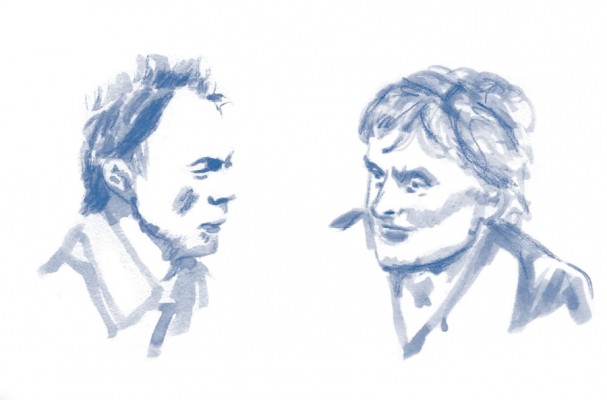
Morality is the key to personal identity

‘Know thyself’ is a flimsy bargain-basement platitude, endlessly recycled but maddeningly empty. It skates the very existential question it pretends to address, the question that obsesses us: what is it to know oneself? The lesson of the identity detector is this: when we dig deep, beneath our memory traces and career ambitions and favourite authors and small talk, we find a constellation of moral capacities. This is what we should cultivate and burnish, if we want people to know who we really are.
Morality is the key to personal identity – Nina Strohminger – Aeon

Wednesday, November 19, 2014

Essay Contest

Essay Contest
Attention philosophy students: Please consider submitting something to this essay contest. Take a paper you wrote for a course in a previous semester or a paper you're writing now. Philosophy faculty would be happy to work with you to polish it for the contest.

Saturday, November 15, 2014

Ethics Bowl 2014

Congratulations to this year's Ethics Bowl team. Ted Hays, Courtney Knox, Christian Willett, Leighann Goins, Ryan Frye and Marc Kennedy competed in Marion, IN recently. They did a great job, ranking 12th and ahead of some very good schools. Thanks to Dr. Yaw for helping prepare the team.

Friday, November 14, 2014

Thursday, November 06, 2014

Viva Humanities Student Symposium

Philosophy students: please consider participating in this Viva Humanities event at NKU in the spring. If you have an idea for a paper or presentation, you can contact any of the program faculty for advice and help.
As part of NKU’s goal to cultivate transdisciplinary inquiry, the Viva Humanities committee invites students to participate in the Viva Humanities Student Symposium showcasing students’ critical and creative endeavors. 
We welcome proposals from diverse disciplines to consider the question “What does it mean to be human in a digital world?” The format for delivery may be a talk, a paper or poster presentation, a reading of creative writing, a discussion of an original art piece, or a digital performance or presentation. Topics for consideration may include (but are not limited to):
  • Impact of technology, digital media, and/or social media on relationships 
  • Arts, film, and literature in the digital world
  • Artificial intelligence 
  • Impact of technology on medicine
    Impact of technology on relationships between countries and cultures 
  • How technology brings the world, countries, and/or people closer together (or further apart) 
  • How technology affects the relationship of humans and the environment/nature
    How technology impacts the environment 
  • Ethical questions related to technology or digital media 
The Symposium will be a one day event on NKU’s campus that will include student panels and poster sessions. We solicit proposals for brief (5 minutes) roundtable presentations that approach our question from a “humanities” perspective. According to the National Foundation on the Arts and Humanities Act from 1965:

The term 'humanities' includes, but is not limited to, the study and interpretation of the following: language, both modern and classical; linguistics; literature; history; jurisprudence; philosophy; archaeology; comparative religion; ethics; the history, criticism and theory of the arts; those aspects of social sciences which have humanistic content and employ humanistic methods; and the study and application of the humanities to the human environment with particular attention to reflecting our diverse heritage, traditions, and history and to the relevance of the humanities to the current conditions of national life. 
Deadline for Abstracts: February 13, 2015"


Viva Humanities: Northern Kentucky University

Tuesday, October 28, 2014

Spring 2015 Schedule

The Spring 2015 schedule is available. Philosophy majors who need to make an advising appointment should contact Rudy Garns (garns@nku.edu) or make an appointment online.

Wednesday, September 03, 2014

Cultural Evolution

Last May, Daniel Dennett gathered, at the Santa Fe Institute, a handful of people who have written about cultural evolution. The general impression was that (as he tweeted some time later) "the meeting revealed a lot of unexpected common ground".
Summaries from participants available here.

Thursday, August 21, 2014

Why A Philosopher Teaches Privacy

While privacy education requires philosophical insight, relevant philosophical analysis must be applied to constantly shifting technological, social, legal, and political conditions.
Why A Philosopher Teaches Privacy

Saturday, August 16, 2014

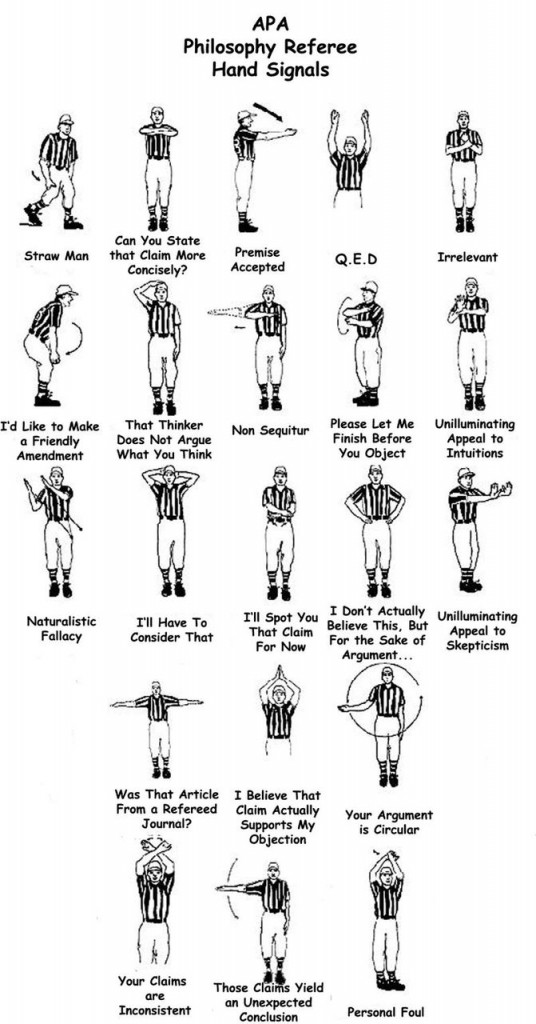
Philosophy Referee Hand Signals

"The next time you’re presiding over an intense philosophical debate, feel free to use these hand signals to referee things. "

Thursday, August 14, 2014

Philosophy and Science: Double Team? » IAI TV

So even before we get to the ethics and the politics, I would say right from the very beginning, science and philosophy are intertwined. Philosophers need to keep pointing that out.
Philosophy and Science: Double Team? 


'via Blog this'

Don’t Dismiss the Humanities

Nicholas Kristof of the NY Times writes
So let me push back at the idea that the humanities are obscure, arcane and irrelevant. These three philosophers influence the way I think about politics, immigration, inequality; they even affect what I eat. 
It’s also worth pointing out that these three philosophers [Berlin, Singer, Rawls] are recent ones. To adapt to a changing world, we need new software for our cellphones; we also need new ideas. The same goes for literature, for architecture, languages and theology.
Don’t Dismiss the Humanities

The humanities strengthen the study of science

Elizabeth H. Simmons, dean of Lyman Briggs College, acting dean of the College of Arts and Letters, and University Distinguished Professor of Physics at Michigan State University, writes about the value of a humanities education for scientists.
In the end, Cushing’s brain collection vividly reminds us why it is crucial to immerse natural science students in interdisciplinary science studies that incorporate the social sciences and humanities. It is not merely because hot new fields are said to lie at the unexplored intersections of fields whose borders were arbitrarily codified decades or centuries ago (though that is true). It is not merely because the terms interdisciplinary, cross-disciplinary, and trans-disciplinary are presently in vogue (though that is also true). It is because such cross-training produces scientists who are both more capable of extraordinary breakthroughs and more mindful of their broader impacts. The humanities truly strengthen science.
The humanities strengthen the study of science

Tuesday, May 27, 2014

Undergrad Philosophy & Religion CFPs

A nice blog that posts call for papers for undergraduate philosophy conferences.


Undergrad Philosophy & Religion CFPs


Wednesday, May 21, 2014

On human nurture | The University of Chicago Magazine

Jesse Prinz
Profile of philosopher Jesse Prinz.

Prinz’s work, which one of his CUNY colleagues applauds as “intellectually promiscuous,” draws on philosophy, cognitive neuroscience, experimental psychology, and other disciplines to explore the ways humans have moved beyond that reptilian origin. Prinz has written a lot, all of it united by an uncompromising empiricism—his position that our diverse sensory and cultural experience, varying from person to person and place to place, is the ultimate foundation for our concepts, conjectures, and knowledge. “The study of the human mind,” he has written, “is fundamentally the study of place.” In other words, nurture over nature. “The headline news in telling our story,” he says, “is in telling the story of learning and change.”
On human nurture | The University of Chicago Magazine

Philosophy student wins on The Voice

Philosophy student Josh Kaufman wins on The Voice. He's taking a break from studying philosophy at Northern Illinois University. 

Friday, May 02, 2014

Spring 2014 Graduation

Saturday May 10 is the College of Arts and Sciences' Commencement ceremonies. Graduation will begin at 9 am and it will conclude around 11:30. At 11:30, immediately after the ceremony our department will be co-hosting a post-graduation gathering for our students and faculty. There will be snacks and refreshments.

The event will be in the Founders Room of the NKU Soccer Complex, from 11:30-1 pm. The Soccer complex is located adjacent to the Bank of Kentucky Center and the parking lot around the BoK Center. It is very easy to find and close to BoK where Commencement will be held. The elevators take you up to the beautiful Founders Room on the second floor.

One of our department's graduates, Mayra Guzman, has the prestigious honor of being selected as the student Speaker for the ceremony and she has received the NKU President’s award.

Friday, April 18, 2014

Department Reception

As the spring semester winds down, let me remind you that next week we will have a department reception to recognize graduating seniors and celebrate student achievements. Please attend; mark you calendars.

Tuesday, April 22, from 5:00-7:00 in SU 104

The reception is open to everyone and refreshments will be served. We will hand out Outstanding Senior awards and induct new Phi Sigma Tau members. The brief awards ceremony will be surrounded by lots of time to mingle with family, friends and faculty.

Wednesday, March 26, 2014

Philosophers' Cafe

This Friday, 3 PM in GH 316. The Philosophers' Cafe. We'll discuss the ethical issues surrounding the human use of animals.

Join us!

Philosophy Advising

Philosophy students who need an advising appointment can go to https://rudygarns.youcanbook.me/. Sign up for a 30-minute slot. Email me at garns@nku.edu if you have questions.

NKU Student Forum

NKU students are invited to attend a Strategic Plan feedback session on Wednesday, April 2, from 3:30-4:30 p.m., in the University Center Ballroom.

This hour-long session will consist of four 15-minute rounds that will allow you to give your insights and feedback at stations set up around Ballroom on topics (enrollment strategies, academic innovation, student retention and success, financial resources, marketing and public awareness, facilities and sustainability, technology support, and community engagement) that are of most interest to you.

It’s like speed dating for our future. This is your chance to help shape NKU as we approach our 50th Anniversary in 2018. We hope to see you there!

You can learn more about the forum and RSVP at this website: http://www.nku.edu/features/2014/march/studentforum.html
Fall 2014
Time to register for fall classes.

Monday, March 17, 2014

Film and Philosophy: Being John Malkovich

Being John Malkovich
Join us this Friday, March 21, from 3:00-4:30 in GH 316 as the Film and Philosophy series presents Being John Malkovich. The 1999 Spike Jonze movie is most certainly the funniest film on free will, personal identity, and the nature of mind that you will ever see. Discussion and snacks, as always.

Enhanced punishment: can technology increase life sentences?

Rebecca Roach, a philosopher at Oxford, talks about how new technologies might change future punishment.
Technology, then, offers (or will one day offer) untapped possibilities to make punishment for the worst criminals more severe without resorting to inhumane methods or substantially overhauling the current UK legal system. What constitutes humane treatment in the context of the suggestions I have made is, of course, debatable. But I believe it is an issue worth debating.
Enhanced punishment: can technology increase life sentences?

Also, read this interview with Roach at Aeon Magazine, Hell on earth: What happens to life sentences if the human lifespan is radically extended? A philosopher talks about future punishment

The Experience Machine

What makes life worth living? Robert Nozick introduces a thought experiment--the experience machine--to refute one answer to the question.

Suppose there were an experience machine that would give you any experience you desired. Superduper neuropsychologists could stimulate your brain so that you would think and feel you were writing a great novel, or making a friend, or reading an interesting book. All the time you would be floating in a tank, with electrodes attached to your brain. Should you plug into this machine for life, preprogramming your life's experiences?... Of course, while in the tank, you won't know that you're there; you'll think it's all actually happening. . . . Would you plug in? What else can matter to us, other than how our lives feel from the inside?


3quarksdaily: The Experience Machine

Sunday, March 16, 2014

Philosophers among the most famous people

Still wondering whether Philosophy is worth studying? The ten most famous people in the last 6,000 years.

1. Aristotle
2. Plato
3. Jesus Christ
4. Socrates
5. Alexander the Great
6. Leonardo Da Vinci
7. Confucius
8. Julius Caesar
9. Homer
10. Pythagoras

Who’s More Famous Than Jesus? - NYTimes.com

Friday, March 07, 2014

Is Philosophy the Most Practical Major?

What makes philosophy different? It can seem self-absorbed; philosophers themselves joke about Arthur Koestler's definition: "the systematic abuse of a terminology specially invented for that purpose." But it also is a tool (like history and religious studies) for thinking about everything else, and every profession from law and medicine to motorcycle maintenance.
Is Philosophy the Most Practical Major? - Edward Tenner - The Atlantic

Wednesday, March 05, 2014

The Unexpected Way Philosophy Majors Are Changing The World Of Business

"You go into the humanities to pursue your intellectual passion, and it just so happens as a byproduct that you emerge as a desired commodity for industry," said Horowitz. "Such is the halo of human flourishing."


The Unexpected Way Philosophy Majors Are Changing The World Of Business

Sunday, March 02, 2014

Louise Antony on Atheism

Louise Antony
Gary Gutting interviews philosopher Louise Antony.
So the question is, why do I say that theism is false, rather than just unproven? Because the question has been settled to my satisfaction. I say “there is no God” with the same confidence I say “there are no ghosts” or “there is no magic.” The main issue is supernaturalism — I deny that there are beings or phenomena outside the scope of natural law.
Read more at the NY Times.

Saturday, March 01, 2014

Interview: David Chalmers and Andy Clark

Interview: David Chalmers and Andy Clark | New Philosopher:

Andy Clark is a Chair in Logic and Metaphysics at the University of Edinburgh. He was Director of the Philosophy/Neuroscience/Psychology Program at Washington University in St. Louis. Andy’s interests span not just philosophy of mind, but also artificial intelligence, including robotics, artificial life and embodied cognition. David Chalmers is Distinguished Professor of Philosophy and director of the Centre for Consciousness at Australian National University. He is also Professor of Philosophy and co-director of the Center for Mind, Brain, and Consciousness at New York University. David is best known for his work on consciousness, but is also interested in metaphysics and epistemology, and the foundations of cognitive science.

Interview with Daniel Stoljar

Daniel Stoljar
An interview with philosopher Daniel Stoljar.
Daniel Stoljar thinks all the time about what we can and can’t learn from introspection, about ignorance and the imagination, the epistemic view of consciousness, the ignorance hypothesis, slugs and tiles, distinctions between empirical and philosophical questions, physicalism as weltanschauung, whether materialism is part of a scientific world view, on materialism and physics and on whether metaphysics harmonising with science is any different from tourism doing so also. This one keeps hooking to the body. Brawlin’.
epistemic consciousness

Friday, February 28, 2014

Greek Philosophy & International Education - NKU

Philosophy major Marc Kennedy has created a video about the Study Abroad opportunities provided by the philosophy program.


"A reflection on the importance of learning outside the classroom, and outside the country. Presented by Dr. Rudy Garns and Dr. Nancy Hancock of the Northern Kentucky Univ. philosophy program."

Wednesday, February 26, 2014

Philosophers' Cafe: Net Neutrality

Join us this Friday, Feb. 28, from 3:00-4:30 in GH 316 as we meet in the Philosophers' Cafe to discuss Net Neutrality. Should Internet service providers and governments should treat all data on the Internet equally? Do providers have a right to charge more for premium content and high-demand services? Do you have a right to access what you want and how you want it on the Internet?

Tuesday, February 18, 2014

Smith College Alumnae Career Paths

A liberal arts degree can take you anywhere—a fact that is born out in the results of a recent survey that examined how alumnae are using their Smith degrees.

Smith College Alumnae Career Paths - Smith College Grécourt Gate

Monday, February 17, 2014

2014 Departmental Essay Contest

SAP Writing Contest
All students of Sociology, Anthropology, or Philosophy (majors, minors, and focus) are invited to submit a paper for the 2014 Departmental Essay Contest. The authors of the selected papers will each be awarded a $200 prize (up to 10 papers may be selected); the winning authors will be expected to submit their papers to one of the Kentucky professional societies for the discipline (e.g., KPA, KAS, or ASK, see descriptions below). Students who attend professional meetings may receive up to an additional $100 to support conference attendance and fees for the 2014-2015 meetings.

Friday, February 07, 2014

Wednesday, February 05, 2014

Film and Philosophy: Memento

Memento
Join us Feb. 14 as the Film and Philosophy series presents Christopher Nolan's Memento. We will screen and discuss this most interesting film: lot's of great philosophical questions to explore. 3:00-6:00 in NKU's GH 316.

Thursday, January 30, 2014

Is economic inequality morally justifiable?

Philosophers' Cafe
Friday, January 31 from 3:00-4:30 the Philosophers' Cafe will meet from 3:00-4;30 in GH 316 to discuss social inequality: Is economic inequality morally justifiable? Please join us.

Saturday, January 25, 2014

Pat Churchland on Colbert

Neuroscientist and philosopher Pat Churchland talks to Stephen Colbert about morality from a scientific perspective,

Sunday, January 19, 2014

9 Philosophy Majors Who Became Extremely Successful In Business

"...philosophy, one of the more cerebral and seemingly less practical majors out there, has produced some incredibly successful people."
  1. Former HP CEO Carly Fiorina was a medieval history and philosophy major at Stanford University.
  2. Activist investor Carl Icahn was a philosophy major at Princeton University.
  3. Former FDIC Chair Sheila Bair was a philosophy major at the University of Kansas.
  4. Hedge fund manager George Soros was a philosophy major at the London School of Economics.
  5. Former Fannie Mae CEO Herbert Allison Jr. was a philosophy major at Yale University.
  6. Former Time Warner CEO Gerald Levin was a philosophy major at Haverford College.
  7. Overstock.com founder and CEO Patrick Byrne got a Ph.D. in philosophy from Stanford University.
  8. Flickr co-founder Stewart Butterfield got both a Bachelor's and Master's degree in philosophy.
  9. PayPal co-founder Peter Thiel was a 20th century philosophy major at Stanford University.
Read more at businessinsider.com

Saturday, January 18, 2014

Philosophy Events for Spring 2014

Events for the philosophically-minded this spring. Mark your calendars!

Film and Philosophy Series
Join us as we screen a feature film, followed with an open discussion of important philosophical themes and questions.

Memento (2001)
February 14, 3:00-6:00 316 GH

Being John Malkovich (1999)
March 21, 3:00-6:00 316 GH

Rashomon (1950)
April 11, 3:00-6:00 316 GH


Philosophers’ Cafe
Join us as we discuss important and current issues of philosophical interest. Open to the public.

“Is economic inequality morally justifiable?”
January 31, 3:00-4:30 316 GH

Topic: Net Neutrality
February 28, 3:00-4:30 316 GH

Topic: Animal Ethics
March 28, 3:00-4:30 316 GH

Topic: TBA
April 25, 3:00-4:30 316 GH

Wednesday, January 15, 2014

Moral Design is the Latest Form of Intelligent Design

Paul Bloom

Paul Bloom authors, "Did God Make These Babies Moral? Intelligent Design's oldest attack on evolution is as popular as ever" on the New Republic web site.
People can be selfish and amoral and appallingly cruel, but we are also capable of transcendent kindness, of great sacrifice and deep moral insight. Isn’t this evidence for God? This version of “intelligent design” is convincing to many people—including scientists who are otherwise unsympathetic to creationism—and it’s worth taking seriously. Like other intelligent design arguments, it doesn’t work, but its failure is an interesting one, touching on findings about evolution, moral psychology, and the minds of babies and young children.

Digital Humanities Lecture

Digital Humanities Lecture
Anthony Beavers, chair of the department of Philosophy at the University of Evansville and director of the Digital Humanities Laboratory, will deliver a talk on the digital humanities on Thursday, January 23 from 3:00-4:00 in the Digitorium. His talk will be "The Digital Revolution and Research in the Humanities: Why the humanities should not be afraid of computational methods."

Everyone is invited.

Kentucky Philosophical Association Spring 2014 Meeting

The Kentucky Philosophical Association will hold its spring 2014 Meeting on Saturday, April 5, 2014 at Western Kentucky University in Bowling Green. Please see the call for papers. We want to particularly encourage students to submit essays to the student essay contest.

Kentucky Philosophical Association Spring 2014 Meeting CFP and Student Essay Contest.

Friday, December 13, 2013

Employability Guide: The Philosophy Degree

Where Next? Unlocking the potential of your philosophy degree. Yes, philosophy students are very employable.
Using this employability guide is a way to help you, as a philosophy student, reflect on the skills you are gaining as you study, and gather evidence of these skills being put into practice. Sometimes, in a non-vocational course, it can be hard to see how what you learn in the course of your studies will prepare you for your post-university career. Being comfortable with this yourself, and getting it across to future employers, is vital, particularly in a subject such as philosophy where there are plenty of popular misconceptions about what the subject actually entails.
Read the guide.

Tuesday, November 26, 2013

Department Reception to Honor Students

Join us Tuesday, December 3 from 4:00-5:30 on second floor Landrum as the department of Sociology, Anthropology and Philosophy honors the achievements it students and fall graduates. Graduating with a philosophy major will be James Simons, Aaron Sprinkles and Teddy Wiseman. Graduating philosophy minors include Claudia Anicama, Maria Koch, Arthur Littlefield, Candice Stanfield, and Robert Townson. Several Religious Studies minors will also graduate: Rosa Christophel, Phylicia Gifford, Jesse Hendricks and James Simons. We are also inducting several students into Phi Sigma Tau, the philosophy honor society. Congratulations Brice Elliot, Maria Koch, Arielle Phillips and Candice Stanfield. Finally we recognize the achievements of this year's Ethics Bowl Team: Cory Clark, Dustin Courtney, Laurence Gerlach, Leighann Goins, Theodore Hays, Arthur Littlefield, John Petrie, Ashley Poe and Robbie Tieman.

Most of the time will be spent mingling with food, friends, faculty and all our students who are majoring or minoring in our programs. Please stop by if only for a few minutes to grab some food and say hi.

Sunday, November 17, 2013

Philosophers' Cafe: Wikileaks, Hacktivism and the Ethics of Whistle-blowing

Philosophers' Cafe


The Philosophers' Cafe will convene this Friday at 3:00 in GH 316 to discuss Wikileaks, Hacktivism and the Ethics of Whistle-blowing. Stop by and bring your friends.

Wednesday, November 13, 2013

2013 NKU Ethics Bowl Team

2013 Ethics Bowl Team
On November 9 the NKU Ethics Bowl team traveled to Marion, IN to participate in the 2013 Regional Ethics Bowl Competition. Teams from different schools debate real-life ethical issues in front of a panel of judges who rank the performances and the arguments. NKU won their debate against Xavier but lost by only a few points to Butler and to Taylor. The NKU team included Cory Clark, Dustin Courtney, Laurence Gerlach, Leighann Goins, Theodore Hays, Arthur Littlefield, John Petrie, Ashley Poe and Robbie Tieman (Ashley and John were not able to travel with the team for this contest). The team practiced for weeks prior to the competition, preparing responses to case studies available in advance. Dr. Yaw served as faculty advisor and coach. Congratulations on a great contest!

2013 Ethics Bowl Team

Saturday, November 02, 2013

Film and Philosophy: High Noon

High Noon
Join us Friday, November 8 from 3:00-6:00 in GH 316 when we screen and discuss the classic western film High Noon. What's the right thing to do? Should one act from a sense of duty? Does religion provide moral answers? What can we expect form our community? Gary Cooper portrays the retired sheriff who takes the Kantian point of view.

Dress for Success


Greek Philosophers
Nancy Hancock's PHI 280 Ancient and Medieval Philosophy students dressed the part this week.

Thursday, October 31, 2013

Science and Philosophy

On the importance of recognizing the relationship between philosophy (and other humanities) and science. The authors revisit the case of H.M. who was unable to form new long-term memories but could learn new skills. What is the difference between knowledge of skills and knowledge of facts: know-how and know-that?
Constructing an argument in mathematics or history is one kind of human activity. Football and cabinetmaking are others. We argue that skilled human activity generally requires the acquisition and manipulation of knowledge, as well as implicit processes that do not depend on propositional knowledge (for example, increased dexterity). It is hard, and perhaps not possible, to forge a theoretically significant distinction between working with one’s hands and working with one’s mind.

THE STONE October 27, 2013, Is the ‘Dumb Jock’ Really a Nerd?By JASON STANLEY and JOHN W. KRAKAUER

Monday, October 28, 2013

Become a Philosophy Major


Experience Philosophy in Greece

Philosophy in Greece
In the spring of 2014 we are offering PHI 394 Study Abroad--Greek Philosophy that includes two weeks of study in Greece (May 14-27). There are no pre-requisites for the course; we hope to attract students with diverse interests and backgrounds. The cost for a triple room is estimated at $3700 (double $3765 and single $4115). That includes airfare, hotel, travel between sites, breakfasts and two dinners. We will spend most of our time in Athens but also explore Delphi (home of the Oracle of Delphi), Mycenae, Corinth, and Epidaurus. We also plan to visit the island of Mykonos for a couple of days. It will be a fantastic experience. See our flyer for more information.

Sunday, October 20, 2013

Philosophers' Cafe: Is There a Moral Grammar?

Philosophers' Cafe
Join us Friday as we discuss questions about the nature of morality. Is our knowledge of moral rules like our knowledge of the rules of grammar? And what kind of knowledge is that?

The talk will be presented as Pecha Kucha: twenty slides, twenty seconds each. Lots of great discussion.

Friday, October 25, 3:00-4:00 in GH 316.

Monday, October 14, 2013

Why Study Logic?

Logic is the means by which we manage reasoning's vulnerability to luck. Once we see that the form of a piece of reasoning is evaluable independently of the content of its premises, we make a large swath of our reasoning invulnerable to luck. This invulnerability is a focal objective of deductive logic – the aim is to show how, in the case of certain forms of reasoning, the truth of our premises absolutely guarantees the truth of our conclusions. This is a high calling, indeed.
3quarksdaily: Why Study Logic?

Information, Knowledge & Intelligence

Alistair MacFarlane writes about information, knowledge and intelligence and about whether computers could one day hold an intelligent conversation.
Information describes: it tells us how the world is now. Knowledge prescribes: it tells us what to do on the basis of accumulated past experience. Intelligence decides: it guides, predicts and advises, telling us what may be done in circumstances not previously encountered, and what the outcome is likely to be.
Information, Knowledge & Intelligence | Issue 98 | Philosophy Now

Sunday, October 06, 2013

Film and Philosophy: Fight Club

Fight Club
Join us October 11 from 3:00-6:00 in NKU's Digitorium when we will screen and discuss Fight Club. Questions about self, self perception, self discovery, society, advertising, appearance and reality, and much more.

Part of our Film and Philosophy series.

Wednesday, October 02, 2013

Spring 2014 PHI Schedule of Classes

Spring 2014
The spring course schedule is out. Priority registration begins October 31. You can see the spring schedule of courses on myNKU and I attached a poster to this email. We are offering a number of 300-level PHI courses you are sure to find interesting.
  • PHI 302 Research Ethics: Ethical, legal, and public policy issues stemming from scientific research. Pence MWF 12:00-12:50
  • PHI 304 Zen: Foundational and developmental exposure to the fundamental and essential teachings of Zen. Miller M 6:15-9:00
  • PHI 309 Global Ethics: How ethicists from many cultures do ethics from their unique cultural perspective. Kenney ONLINE
  • PHI 315 Knowledge and Reality: Differing views on the nature of knowledge and reality. Garns TR 12:15-1:30
  • PHI 320 Social and Political Philosophy: Nature and purposes of the state, grounds of political obligation, freedom and its limitations, human rights, social justice, and selected contemporary issues. Frimpong-Mansoh MW 2:00-3:15
And for the first time we are offering a special study abroad experience in Greece. Students who take PHI 394 Study Abroad--Greek Philosophy will spend two weeks in Greece--the birthplace of Western philosophy--during the last two weeks in May. (See attachment) In the course students will critically examine the issues and ideas that confronted the Greek philosophers at the advent of Western philosophy, and come to appreciate the cultural context in which they appear. Hancock TR 1:40-2:55. We are waiving pre-requisites for the course and it will count toward the philosophy major requirements. You don't need to be a philosophy major to take the course and travel to Greece; the course is open to all students; please tell your friends. We should have an estimate on the cost in the next few weeks. Contact Nancy Hancock (hancockn@nku.edu) or me (garns@nku.edu) for more information.

Wednesday, September 25, 2013

Good news for philosophy majors


Philosophy majors do well on test scores and salaries. This has been true for some time and continues to be the case.

Sunday, September 22, 2013

Philosophers' Cafe: Race, Gender, American Justice System

Philosophers' Cafe
Join us this Friday, September 27, from 3:00-4:00 in GH 316 to discuss race and gender in the American justice system. This should be a great discussion. Open to the public.

Saturday, September 07, 2013

Film and Philosophy: The Matrix

The Matrix (1999)
This Friday (9/13), the Film and Philosophy series presents The Matrix (1999) from 3-6 in the Digitorium (GH). We will watch the film and then discuss. You might want to refresh your memory of Plato's cave or Descartes' Evil Demon before Friday.

Sunday, September 01, 2013

Experience Philosophy in GREECE!

May 14- 27, 2014


The Department of Sociology, Anthropology and Philosophy and the NKU Office of Education Abroad invite you to visit the birthplace of Western philosophy. 


Epidauros
Walk in the footsteps of Socrates!
Join NKU philosophy professors Dr. Nancy Hancock and Dr. Rudy Garns on a two-week tour of Greece that includes visits to the Acropolis and the Parthenon; the ancient agora where Socrates faced trial and was executed; the Temple of Apollo where the Oracle of Delphi issued her prophesies; the Stoa that was home to the Stoics; the Lyceum where Aristotle taught; the ancient cities of Mycenea, and Corinth; the Theater at Epidaurus; the island of Mykonos; and much more.

Who may participate?
Students who want course credit should sign up for PHI 394 Greek Philosophy; the visit to Greece is a required part of the course. Or they can create an independent study for 1 credit hour with a faculty mentor in a discipline of your choice. But you don’t need to sign up for the class to join us on the trip. Current NKU students will receive priority enrollment, but alumni and friends of the Department of Sociology, Anthropology and Philosophy, and members of the general public are also welcome to go on the program based on space availability.

Plato
How much does the program cost?
The cost of the program is yet to be determined. The price will include airfare, hotel accommodation in double occupancy (single occupancy available at an extra cost), ground transportation, all breakfasts and two dinners, and admission to all scheduled museums. Financial aid and partial scholarships may be available to qualified students. Every effort will be made to adhere to the advertised cost of the program; however, should financial circumstances warrant it some program items may be deleted to avoid a price increase.

What will the itinerary be?
We depart for Athens on May 14 and return to the US May 27. We will spend several days in Athens visiting the Acropolis, the new Acropolis Museum, the National Archaeological Museum, and the Agora, where Socrates faced his trial and was put to death. We will take a three day side tour of Delphi, Nafplion, Mycenae, Epidaurus and Corinth. And a second side trip to the island of Mykonos. This itinerary is tentative and subject to change.

Parthenon
How do I apply?
Applications are available in the NKU Office of Education Abroad in UC 415. The application for the International Study Scholarship is also available in UC 415 or online at http://studyabroad.nku/start/scholarship.php.

More information?
Contact the Office of Education Abroad, University Center 430, (859) 572-6194 email: melishm1@nku.edu.

Thursday, August 29, 2013

Ethics Bowl! Join the team.

Sign up now
Who's up for a good ethics debate? The Ethics Bowl is coming this fall. See Dr. Yaw for info.

Saturday, August 03, 2013

Cute. Sexy. Funny. Dan Dennett

Daniel Dennett
Dan Dennett discusses his TED talk on the evolutionary history of sweetness, cuteness, sexiness, and humor.
The important lesson from evolutionary thinking here is that it is a mistake to think that first there was sweetness, sexiness, and cuteness, and then we evolved to love these properties. That's just about backwards; these properties came into existence as effects of our tastes for them. This is a strange inversion of reasoning, but it's right.
 TED WEEKENDS: It's Not A Question Of Taste...

Wednesday, July 31, 2013

Be employable, study philosophy

But a smattering of undergrad philosophy classes taught me something applicable to any and every job: clarity of thought. Name me one aspect of your life that doesn’t benefit from being able to think something through clearly.
Be employable, study philosophy - Salon.com

Fall Philosophy Events

Mark your calendars for our fall Philosophy events.

Film and Philosophy series

The second Friday of every month from 3:00-6:00 we screen and discuss a feature film.

Friday, September 13, 3:00-6:00 Digitorium (GH) The Matrix (1999)
Friday, October 11, 3:00-6:00 Digitoriium (GH) Fight Club (1999)
Friday, November 8, 3:00-6:00 GH 316 High Noon (1952)

Philosophers' Cafe

The fourth Friday of every month from 3:00-4:00 we invite the larger community to join us as we discuss a provocative philosophical issue.

Friday, September 27, 3:00-4:00 GH 316 Race and gender in the American justice system
Friday, October 25, 3:00-4:00 GH 316 Is there a moral grammar?
Friday, November 22, 3:00-4:00 GH 316 Wikileaks, Hacktivism and the ethics of whistle-blowing 

Tuesday, July 30, 2013

Best Majors for GRE Scores in 2013: Philosophy Dominates

Philosophy majors tend to do well on GRE exams, particularly the verbal and analytic sections.
Philosophy departments focus heavily on logical reasoning and identifying logical fallacies, most likely leading to philosophy students' dominance of the verbal and analytical writing sections.
Buzz Blog: Best Majors for GRE Scores in 2013: Philosophy Dominates

Wednesday, July 24, 2013

Coming this fall: Viva Humanities! @ NKU

Have you thought about how studying the humanities would prepare you for life and a career? 
Viva Humanities is a semester-long celebration of the valuable skills and competencies developed through studying and working in the humanities. 
We have scheduled a six-speaker series of very successful professionals who want to share with you how the humanities helped make them into the people they are today. 
Hear for yourself how English, History, Philosophy and World Languages and Literatures can prepare you to be successful in today’s world of high speed analysis, decision-making, change and communication.
Viva Humanities

Sunday, July 21, 2013

the mad dog naturalist

Alex Rosenberg
Alex Rosenberg, a philosopher of science at Duke, is interviewed at 3:AM Magazine.
Alex Rosenberg is the mad dog proponent of nice nihilism who broods on the implications of naturalism. He is always thinking about the relationship between science and religion, science and its laws, reductionism, Dan Dennett, the philosophy of biology, about why scientific realism is better than instrumentalism, giving the atheist a guide, why it’s ok not to have freewill, why Fodor was wrong about Darwinism, why economics is mostly mathematical politics and is improving but still faces the reflexivity problem, about how biology is growing in importance in the social sciences and about analytical metaphysics and recent disputes. This one bites!
the mad dog naturalist » 3:AM Magazine

Friday, July 12, 2013

Professor Retires

Some of our friends of the Philosophy Program might have heard already that Professor Bob Trundle has retired this summer. We was a member of the university for 26 years and taught a wide variety of courses for our program.

Prof. Trundle was scheduled to teach several courses in the fall and over the summer we worked to cover many of those classes. We will cancel the Existentialism course (PHI 305) for this fall but plan to offer it again next fall. Nancy Hancock will cancel her PHI 360 Environmental Philosophy course and take over Dr. Trundle's PHI 280 History of Ancient Philosophy class. The general education classes will all be offered as scheduled.

Those still looking for PHI classes should consider PHI 311 Philosophy of Women, PHI 350 Philosophy of Religion, PHI 375 Ethical Theories and PHI 394 Philosophy of Love. All of these have seats remaining.

Monday, May 27, 2013

The relentless naturalist

Rebecca Kukla
3:AM Magazine interviews philosopher Rebecca Kukla.
Rebecca Kukla is chillin’ rad philosopher always thinking about the pragmatic topography of the space of reasons. She thinks philosophers have thought too much about statements broadcasting information and should look elsewhere like Plato, Rousseau and Nietzsche did.She’s suspicous of semantic theory, thinks McDowell wrong to think we are accountable to objects, thinks squirrels illustrate something important, finds certain ubiquitous risk communication both unhelpful and damaging to moral agency, is a relentless naturalist who thinks we should teach everyone to be scientifically and statistically literate, doesn’t mind being called a naturalised Kantian and has a great deal of sensible stuff to say about the scandal of gender inequality in academic philosophy. All in all, this is slick fuggly jive.
the relentless naturalist » 3:AM Magazine

Tuesday, May 21, 2013

Soren Kierkegaard Turns Two Hundred

Soren Kierkegaard
If your soul has bunions, however, reading Kierkegaard may inflame them: he invented self-doubt in its modern form. “Either/Or,” for example, ought really to be subtitled “Neither.” Kierkegaard, who has often been called the father of existentialism, champions the examined life, and the conscious choice that informs it—yet he mocks choice as futile. “I see it all perfectly,” he wrote. “There are two possible situations—one can either do this or that. My honest opinion and my friendly advice is this: do it or do not do it—you will regret both.”
Soren Kierkegaard Turns Two Hundred : The New Yorker
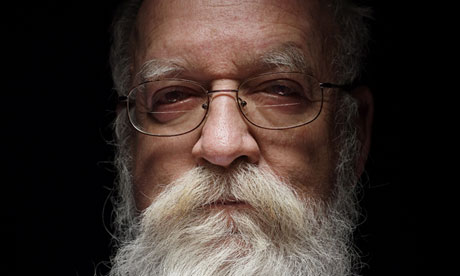
Why isn't there more progress in philosophy?

A talk given by David Chalmers (ANU, NYU) at the Moral Sciences Club of the Faculty of Philosophy on 7th May 2013.

Video & Audio: Why isn't there more progress in philosophy?

Sunday, May 19, 2013

Daniel Dennett's seven tools for thinking

Daniel Dennett
Cognitive scientist and philosopher Daniel Dennett is one of America's foremost thinkers. In this extract from his new book, he reveals some of the lessons life has taught him.

  1. Use you mistakes
  2. Respect your opponent
  3. The "surely" klaxon
  4. Answer Rhetorical Questions
  5. Employ Occam's razor
  6. Don't waste your time on rubbish
  7. Beware of deepities

Read about it: Daniel Dennett's seven tools for thinking

Friday, May 10, 2013

Edouard Machery Interview

Edouard Machery
Interview with philosopher Edouard Machery.
Edouard Machery is a killer cool philosopher working on the cutting edge of interfaces between analytic philosophy, psychology, xphi and cognitive science. He’s a continental doing analytic philosophy who thinks philosophy without science is blind. He’s always investigating social phenomena like racism and the ‘integration challenge’, alongside the nature of concepts and whether they are the same as perceptual representation. This month he’ll be going head to head with the chillin’ blue-haired philosopher Jesse Prinz in Latvia on this very issue. He thinks concepts aren’t a natural kind and kind of thinks that studying them is like studying a science of Tuesdays. He’s also brooding on what the folk think and whether experts have judgements that can be trusted, suggesting that philosophy needs to be humble. Everything he does goes to the heart of how we think about ourselves and all in all is one hell of a badass groove. Shakin’.
without concepts » 3:AM Magazine

Tuesday, May 07, 2013

The Philosophy of Kierkegaard

Soren Kierkegaard
A 1984 documentary on existentialist philosopher Soren Kierkegaard.
Danish philosopher Søren Kierkegaard—often considered the first existentialist—was born 200 years ago this past Sunday in Copenhagen. Writing under pseudonyms like Johannes Climacus and Johannes de Silentio, Kierkegaard attacked both the idealism of contemporary philosophers Hegel and Schelling and the bourgeois complacency of European Christendom. A highly skilled rhetorician, Kierkegaard preferred the indirect method, deploying irony, ridicule, parody and satire in a paradoxical search for individual authenticity within a European culture he saw as beset by self-important puffery and unthinking mass movements.
The Philosophy of Kierkegaard, the First Existentialist Philosopher, Revisited in 1984 Documentary | Open Culture

Saturday, May 04, 2013

Why Study Philosophy?

Why study philosophy? It prepares you for well-paying jobs. It's interesting. It's great preparation for law school, business school or graduate school. The USC philosophy department has gathered some interesting data.

Undergraduate > School of Philosophy

Wednesday, May 01, 2013

Daniel Dennett, ‘Intuition Pumps and Other Tools for Thinking’

Dan Dennett
Dan Dennett has written a new book about thought experiments, imagination, and the art of doing philosophy.
“Philosophers are infamous for being navel-gazers, but a lot of them are remarkably unreflective about their own methods.” He added, “If you do get a little self-conscious, it opens up so many weak spots and helps you think.”
Daniel Dennett, Author of ‘Intuition Pumps and Other Tools for Thinking’

Monday, April 29, 2013

Ethics and the Limits of Evolutionary Psychology

Interesting essay on the state of naturalized ethics and the influence of evolutionary psychology.

"Wittgenstein sums this up for us: 'if I want to fix my mind on what I mean by absolute or ethical value…I wonder at the existence of the world.'"

IASC: The Hedgehog Review - Volume 15, No. 1 (Spring 2013) - Ethics and the Limits of Evolutionary Psychology - Thomas de Zengotita

Wednesday, April 17, 2013

the possible worlds hedgehog

Philosopher Robert Stalnaker is interviewed at 3amMagazine.
Robert Stalnaker is the grandmaster flash of contemporary metaphysicals. He thinks that a language-first approach to philosophy is ludicrous, Paul Grice an inspiration and Saul Kripke very important to his early thinking. He broods on issues about internalist and externalist doctrines and approaches, on our knowledge of the external world, about the nature of phenomenal knowedge, about the view from nowhere, the opacity of transparency, contextualism, relativism, possible worlds, the entanglement of semantics with metaphysics, haecceitism and the beauty of metaphysical theories, amongst other things. He is currently on a phased retirement at MIT and becoming a Visiting Professor at Columbia. He is simply a modern daddy of the mac!Chillin’!
the possible worlds hedgehog » 3:AM Magazine

Monday, April 01, 2013

On the benefits of a philosophy major

Philosophy majors are regularly exposed to critical thinking and analysis. They have skills that make them very attractive on the job market.
Thus it is not a surprise (at least to me!) that philosophy majors are some of the best with regard to analytical skills, evidenced by the above graphic. According to the Educational Testing Service, which administers the GRE, the analytic writing section tests “critical thinking and analytical writing skills. It assesses [your] ability to articulate and support complex ideas, construct and evaluate arguments, and sustain a focused and coherent discussion.” Philosophy majors are also the best with regard to verbal ability, and the best of the liberal arts students at quantitative reasoning. Simply put, our students have the best all-around intellectual skills.
On the benefits of a philosophy major | Pleas and Excuses