Wednesday, October 02, 2013

Spring 2014 PHI Schedule of Classes

Spring 2014
The spring course schedule is out. Priority registration begins October 31. You can see the spring schedule of courses on myNKU and I attached a poster to this email. We are offering a number of 300-level PHI courses you are sure to find interesting.
  • PHI 302 Research Ethics: Ethical, legal, and public policy issues stemming from scientific research. Pence MWF 12:00-12:50
  • PHI 304 Zen: Foundational and developmental exposure to the fundamental and essential teachings of Zen. Miller M 6:15-9:00
  • PHI 309 Global Ethics: How ethicists from many cultures do ethics from their unique cultural perspective. Kenney ONLINE
  • PHI 315 Knowledge and Reality: Differing views on the nature of knowledge and reality. Garns TR 12:15-1:30
  • PHI 320 Social and Political Philosophy: Nature and purposes of the state, grounds of political obligation, freedom and its limitations, human rights, social justice, and selected contemporary issues. Frimpong-Mansoh MW 2:00-3:15
And for the first time we are offering a special study abroad experience in Greece. Students who take PHI 394 Study Abroad--Greek Philosophy will spend two weeks in Greece--the birthplace of Western philosophy--during the last two weeks in May. (See attachment) In the course students will critically examine the issues and ideas that confronted the Greek philosophers at the advent of Western philosophy, and come to appreciate the cultural context in which they appear. Hancock TR 1:40-2:55. We are waiving pre-requisites for the course and it will count toward the philosophy major requirements. You don't need to be a philosophy major to take the course and travel to Greece; the course is open to all students; please tell your friends. We should have an estimate on the cost in the next few weeks. Contact Nancy Hancock (hancockn@nku.edu) or me (garns@nku.edu) for more information.

Wednesday, September 25, 2013

Good news for philosophy majors


Philosophy majors do well on test scores and salaries. This has been true for some time and continues to be the case.

Sunday, September 22, 2013

Philosophers' Cafe: Race, Gender, American Justice System

Philosophers' Cafe
Join us this Friday, September 27, from 3:00-4:00 in GH 316 to discuss race and gender in the American justice system. This should be a great discussion. Open to the public.

Saturday, September 07, 2013

Film and Philosophy: The Matrix

The Matrix (1999)
This Friday (9/13), the Film and Philosophy series presents The Matrix (1999) from 3-6 in the Digitorium (GH). We will watch the film and then discuss. You might want to refresh your memory of Plato's cave or Descartes' Evil Demon before Friday.

Sunday, September 01, 2013

Experience Philosophy in GREECE!

May 14- 27, 2014


The Department of Sociology, Anthropology and Philosophy and the NKU Office of Education Abroad invite you to visit the birthplace of Western philosophy. 


Epidauros
Walk in the footsteps of Socrates!
Join NKU philosophy professors Dr. Nancy Hancock and Dr. Rudy Garns on a two-week tour of Greece that includes visits to the Acropolis and the Parthenon; the ancient agora where Socrates faced trial and was executed; the Temple of Apollo where the Oracle of Delphi issued her prophesies; the Stoa that was home to the Stoics; the Lyceum where Aristotle taught; the ancient cities of Mycenea, and Corinth; the Theater at Epidaurus; the island of Mykonos; and much more.

Who may participate?
Students who want course credit should sign up for PHI 394 Greek Philosophy; the visit to Greece is a required part of the course. Or they can create an independent study for 1 credit hour with a faculty mentor in a discipline of your choice. But you don’t need to sign up for the class to join us on the trip. Current NKU students will receive priority enrollment, but alumni and friends of the Department of Sociology, Anthropology and Philosophy, and members of the general public are also welcome to go on the program based on space availability.

Plato
How much does the program cost?
The cost of the program is yet to be determined. The price will include airfare, hotel accommodation in double occupancy (single occupancy available at an extra cost), ground transportation, all breakfasts and two dinners, and admission to all scheduled museums. Financial aid and partial scholarships may be available to qualified students. Every effort will be made to adhere to the advertised cost of the program; however, should financial circumstances warrant it some program items may be deleted to avoid a price increase.

What will the itinerary be?
We depart for Athens on May 14 and return to the US May 27. We will spend several days in Athens visiting the Acropolis, the new Acropolis Museum, the National Archaeological Museum, and the Agora, where Socrates faced his trial and was put to death. We will take a three day side tour of Delphi, Nafplion, Mycenae, Epidaurus and Corinth. And a second side trip to the island of Mykonos. This itinerary is tentative and subject to change.

Parthenon
How do I apply?
Applications are available in the NKU Office of Education Abroad in UC 415. The application for the International Study Scholarship is also available in UC 415 or online at http://studyabroad.nku/start/scholarship.php.

More information?
Contact the Office of Education Abroad, University Center 430, (859) 572-6194 email: melishm1@nku.edu.

Thursday, August 29, 2013

Ethics Bowl! Join the team.

Sign up now
Who's up for a good ethics debate? The Ethics Bowl is coming this fall. See Dr. Yaw for info.

Saturday, August 03, 2013

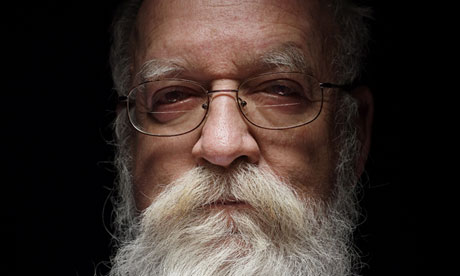
Cute. Sexy. Funny. Dan Dennett

Daniel Dennett
Dan Dennett discusses his TED talk on the evolutionary history of sweetness, cuteness, sexiness, and humor.
The important lesson from evolutionary thinking here is that it is a mistake to think that first there was sweetness, sexiness, and cuteness, and then we evolved to love these properties. That's just about backwards; these properties came into existence as effects of our tastes for them. This is a strange inversion of reasoning, but it's right.
 TED WEEKENDS: It's Not A Question Of Taste...

Wednesday, July 31, 2013

Be employable, study philosophy

But a smattering of undergrad philosophy classes taught me something applicable to any and every job: clarity of thought. Name me one aspect of your life that doesn’t benefit from being able to think something through clearly.
Be employable, study philosophy - Salon.com

Fall Philosophy Events

Mark your calendars for our fall Philosophy events.

Film and Philosophy series

The second Friday of every month from 3:00-6:00 we screen and discuss a feature film.

Friday, September 13, 3:00-6:00 Digitorium (GH) The Matrix (1999)
Friday, October 11, 3:00-6:00 Digitoriium (GH) Fight Club (1999)
Friday, November 8, 3:00-6:00 GH 316 High Noon (1952)

Philosophers' Cafe

The fourth Friday of every month from 3:00-4:00 we invite the larger community to join us as we discuss a provocative philosophical issue.

Friday, September 27, 3:00-4:00 GH 316 Race and gender in the American justice system
Friday, October 25, 3:00-4:00 GH 316 Is there a moral grammar?
Friday, November 22, 3:00-4:00 GH 316 Wikileaks, Hacktivism and the ethics of whistle-blowing 

Tuesday, July 30, 2013

Best Majors for GRE Scores in 2013: Philosophy Dominates

Philosophy majors tend to do well on GRE exams, particularly the verbal and analytic sections.
Philosophy departments focus heavily on logical reasoning and identifying logical fallacies, most likely leading to philosophy students' dominance of the verbal and analytical writing sections.
Buzz Blog: Best Majors for GRE Scores in 2013: Philosophy Dominates

Wednesday, July 24, 2013

Coming this fall: Viva Humanities! @ NKU

Have you thought about how studying the humanities would prepare you for life and a career? 
Viva Humanities is a semester-long celebration of the valuable skills and competencies developed through studying and working in the humanities. 
We have scheduled a six-speaker series of very successful professionals who want to share with you how the humanities helped make them into the people they are today. 
Hear for yourself how English, History, Philosophy and World Languages and Literatures can prepare you to be successful in today’s world of high speed analysis, decision-making, change and communication.
Viva Humanities

Sunday, July 21, 2013

the mad dog naturalist

Alex Rosenberg
Alex Rosenberg, a philosopher of science at Duke, is interviewed at 3:AM Magazine.
Alex Rosenberg is the mad dog proponent of nice nihilism who broods on the implications of naturalism. He is always thinking about the relationship between science and religion, science and its laws, reductionism, Dan Dennett, the philosophy of biology, about why scientific realism is better than instrumentalism, giving the atheist a guide, why it’s ok not to have freewill, why Fodor was wrong about Darwinism, why economics is mostly mathematical politics and is improving but still faces the reflexivity problem, about how biology is growing in importance in the social sciences and about analytical metaphysics and recent disputes. This one bites!
the mad dog naturalist » 3:AM Magazine

Friday, July 12, 2013

Professor Retires

Some of our friends of the Philosophy Program might have heard already that Professor Bob Trundle has retired this summer. We was a member of the university for 26 years and taught a wide variety of courses for our program.

Prof. Trundle was scheduled to teach several courses in the fall and over the summer we worked to cover many of those classes. We will cancel the Existentialism course (PHI 305) for this fall but plan to offer it again next fall. Nancy Hancock will cancel her PHI 360 Environmental Philosophy course and take over Dr. Trundle's PHI 280 History of Ancient Philosophy class. The general education classes will all be offered as scheduled.

Those still looking for PHI classes should consider PHI 311 Philosophy of Women, PHI 350 Philosophy of Religion, PHI 375 Ethical Theories and PHI 394 Philosophy of Love. All of these have seats remaining.

Monday, May 27, 2013

The relentless naturalist

Rebecca Kukla
3:AM Magazine interviews philosopher Rebecca Kukla.
Rebecca Kukla is chillin’ rad philosopher always thinking about the pragmatic topography of the space of reasons. She thinks philosophers have thought too much about statements broadcasting information and should look elsewhere like Plato, Rousseau and Nietzsche did.She’s suspicous of semantic theory, thinks McDowell wrong to think we are accountable to objects, thinks squirrels illustrate something important, finds certain ubiquitous risk communication both unhelpful and damaging to moral agency, is a relentless naturalist who thinks we should teach everyone to be scientifically and statistically literate, doesn’t mind being called a naturalised Kantian and has a great deal of sensible stuff to say about the scandal of gender inequality in academic philosophy. All in all, this is slick fuggly jive.
the relentless naturalist » 3:AM Magazine

Tuesday, May 21, 2013

Soren Kierkegaard Turns Two Hundred

Soren Kierkegaard
If your soul has bunions, however, reading Kierkegaard may inflame them: he invented self-doubt in its modern form. “Either/Or,” for example, ought really to be subtitled “Neither.” Kierkegaard, who has often been called the father of existentialism, champions the examined life, and the conscious choice that informs it—yet he mocks choice as futile. “I see it all perfectly,” he wrote. “There are two possible situations—one can either do this or that. My honest opinion and my friendly advice is this: do it or do not do it—you will regret both.”
Soren Kierkegaard Turns Two Hundred : The New Yorker

Why isn't there more progress in philosophy?

A talk given by David Chalmers (ANU, NYU) at the Moral Sciences Club of the Faculty of Philosophy on 7th May 2013.

Video & Audio: Why isn't there more progress in philosophy?

Sunday, May 19, 2013

Daniel Dennett's seven tools for thinking

Daniel Dennett
Cognitive scientist and philosopher Daniel Dennett is one of America's foremost thinkers. In this extract from his new book, he reveals some of the lessons life has taught him.

  1. Use you mistakes
  2. Respect your opponent
  3. The "surely" klaxon
  4. Answer Rhetorical Questions
  5. Employ Occam's razor
  6. Don't waste your time on rubbish
  7. Beware of deepities

Read about it: Daniel Dennett's seven tools for thinking

Friday, May 10, 2013

Edouard Machery Interview

Edouard Machery
Interview with philosopher Edouard Machery.
Edouard Machery is a killer cool philosopher working on the cutting edge of interfaces between analytic philosophy, psychology, xphi and cognitive science. He’s a continental doing analytic philosophy who thinks philosophy without science is blind. He’s always investigating social phenomena like racism and the ‘integration challenge’, alongside the nature of concepts and whether they are the same as perceptual representation. This month he’ll be going head to head with the chillin’ blue-haired philosopher Jesse Prinz in Latvia on this very issue. He thinks concepts aren’t a natural kind and kind of thinks that studying them is like studying a science of Tuesdays. He’s also brooding on what the folk think and whether experts have judgements that can be trusted, suggesting that philosophy needs to be humble. Everything he does goes to the heart of how we think about ourselves and all in all is one hell of a badass groove. Shakin’.
without concepts » 3:AM Magazine