Critical thinking is actually just the first step in a larger process that we might want to call constructive thinking. Rest assured, this is not just wordplay. Critical thinking represents the highly valuable inquiry and interrogation prerequisite to problem identification; it involves the analysis of an argument's merits and faults. It is the process of judging, approving or disapproving. Liberal arts colleges encourage students to ask lots of questions. Through questions, students unravel or deconstruct an argument in order to access its utility. While none of this is inherently negative, it too often becomes routinely condemnatory. It can also breed intellectual laziness; the job of taking something apart is far easier than the job of putting it back together again. The identification of problems made possible by critical thinking is useful only if it gives rise to the problem solving of constructive thinking. The desired endgame is problem solving, not critical thinking for its own sake.Liberal arts colleges should focus on how they help students learn 'constructive thinking'
Friday, March 06, 2015
Constructive Thinking

Top 10 Living Philosophers to Read Today

And there are lots of younger philosophers doing great work worth reading. Many of them--more than 1-in-10--are women.
Thursday, March 05, 2015
Walter Sinnott-Armstrong on Moral Psychology
Check out this podcast on moral psychology.
Nigel Warburton interviews Walter Sinnott-Armstrong about moral psychology for this episode of the Philosophy Bites podcast. Is recent psychological research relevant to moral philosophy? If so, what exactly can it provide?"philosophy bites: Walter Sinnott-Armstrong on Moral Psychology
Monday, March 02, 2015
Why Our Children Don't Think There Are Moral Facts
We can do better. Our children deserve a consistent intellectual foundation. Facts are things that are true. Opinions are things we believe. Some of our beliefs are true. Others are not. Some of our beliefs are backed by evidence. Others are not. Value claims are like any other claims: either true or false, evidenced or not. The hard work lies not in recognizing that at least some moral claims are true but in carefully thinking through our evidence for which of the many competing moral claims is correct. That’s a hard thing to do. But we can’t sidestep the responsibilities that come with being human just because it’s hard.Why Our Children Don't Think There Are Moral Facts - NYTimes.com
Sunday, February 15, 2015
History from the Early Modern Philosophers
An interview with the philosopher Dan Garber.
Daniel Garber knows philosophy makes some parents go silent and it’s broad enough to encompass everything worth while. He thinks about the history of seventeenth century philosophy, about what makes the early moderns modern, about the giants of the time and what we learn from studying the lesser known ones too, about the importance of Kant to our conception of the early moderns, about Leibniz, about contrasts between Leibniz and Descartes and Spinoza, about the metaphysical schemes of the time, about Descartes and Galileo, about Hobbes and Spinoza, Pascal’s wager, and about x-phi and comparing our present context with the early mods. This one wakes us up to the long years we’ve been travelling…History from the Early Modern Philosophers » 3:AM Magazine
Friday, February 06, 2015
Luciano Floridi on the Philosophy of Information
The Oxford Professor of Philosophy and Ethics of Information says methods for discussing the ethics of information technology have been latent in philosophy from its origins.Luciano Floridi on the Philosophy of Information | Five Books
Thursday, February 05, 2015
Stuart Kauffman on Free Will, God, ESP and Other Mysteries

Few living scientists are as ambitious in their choice of problems as Stuart Kauffman. He is a polymath, with a degree in medicine and training in biochemistry, genetics, physics, philosophy and other fields. He roams across disciplinary boundaries seeking answers to the riddles that obsess him. Why is reality so beautifully structured rather than being a chaotic mess? How probable was life? Is evolution enough to explain life’s origin and diversity? How does a brain make a mind? How do minds choose?Scientific Seeker Stuart Kauffman on Free Will, God, ESP and Other Mysteries
Tuesday, February 03, 2015
William Molyneux’s thought experiment

Optical connections: William Molyneux’s thought experiment A person, blind from birth, has learned to distinguish between a cube and a sphere by touch. On recovering their sight, would they then be able to distinguish between these objects without first touching them? David Baker investigates.
Optical connections: William Molyneux’s thought experiment
Sunday, February 01, 2015
Philosophy Pays

I think, therefore I … make money! Graduates with philosophy degrees have "higher earnings potential than many other arts and humanities-related fields," said TheRichest. Payscale reports midcareer median salaries are $84,000 for your modern day Kant or Descartes. Why? Well, let's be logical. Which is exactly what philosophy programs require of students … logic. Thinking is hard, it requires analysis, and those who can do it well can get a good job … which is a good philosophy to have.
A philosophy degree earns more than an accounting degree | Top/Best/Most - Yahoo Finance
Tuesday, January 06, 2015
Who Studies Philosophy?

Who Studies Philosophy? - The American Philosophical Association
Monday, January 05, 2015
Alan Turing & The Cartesian Challenge

At a time when more people than ever are getting to know about Alan Turing through “The Imitation Game”, it seems fitting to contribute to this growing public interest in his scientific and political legacy, by exploring his ground-breaking ideas, and the tumultuous happenings of his life, through the unique lens of academic philosophy. Although Turing never described himself as aphilosopher, his three major contributions to the history of ideas: The Turing Test, The Turing Machine and The Church-Turing Thesis, have been of great interest to scholars working in the philosophy of mind and computing. His 1950 paper, “Computing Machinery and Intelligence”, which was published in the prestigious philosophical journal Mind, was especially successful in capturing the fascination of analytic philosophers.The Computational Theory of Mind: Alan Turing & The Cartesian Challenge : The Critique
Tuesday, December 23, 2014
The Auto-Icon
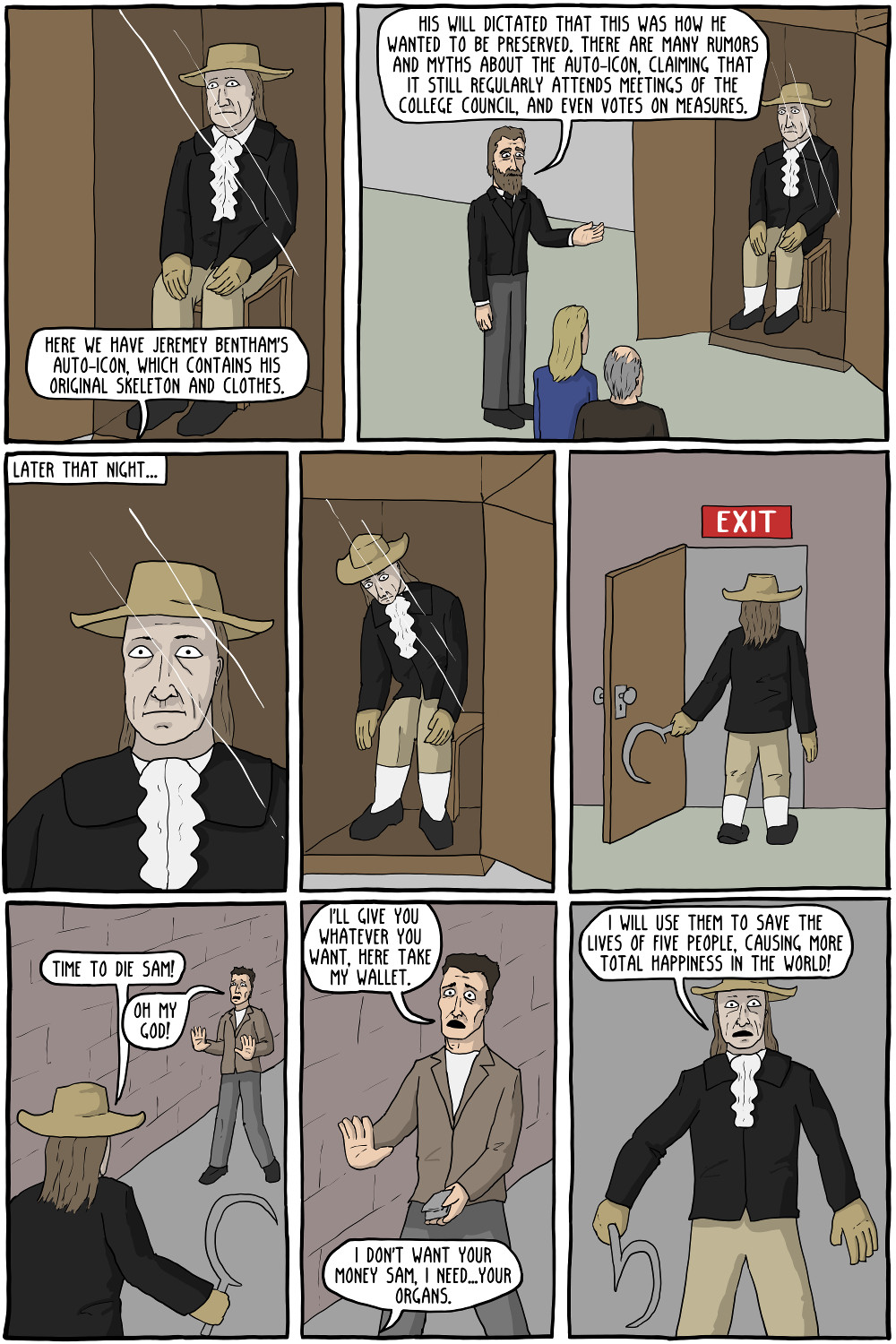
The Auto-Icon - Existential Comics
The odd phenomenon of "blind insight"
A growing body of evidence is revealing that our guesses and our confidence in those guesses don’t come from the same place in our minds.
The odd phenomenon of "blind insight" - Boing Boing
The odd phenomenon of "blind insight" - Boing Boing
Extended Cognition (Part I)
 |
| Andy Clark and David Chalmers |
3quarksdaily: Extended Cognition (Part I)
Tuesday, December 16, 2014
Seven Tools For Critical Thinking

Dennett excerpts seven tools for thinking from the new book. Having taught critical thinking and argumentation to undergraduates for years, I can say that his advice is pretty much standard fare of critical reasoning. But Dennett’s formulations are uniquely—and bluntly—his own.Philosopher Daniel Dennett Presents Seven Tools For Critical Thinking | Open Culture
9 Philosophical Thought Experiments
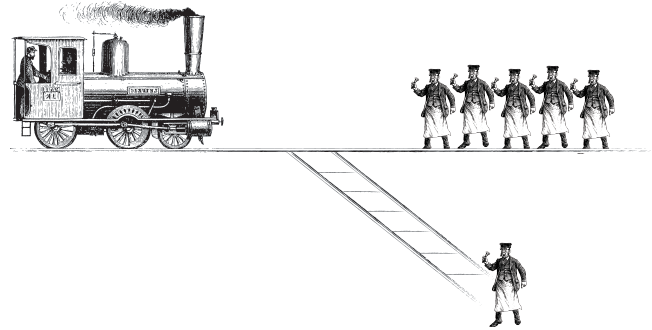
Sometimes, the best way to illustrate a complicated philosophical concept is by framing it as a story or situation. Here are nine such thought experiments with downright disturbing implications.9 Philosophical Thought Experiments That Will Keep You Up at Night

Friday, December 12, 2014
The Optimistic Science of Leibniz
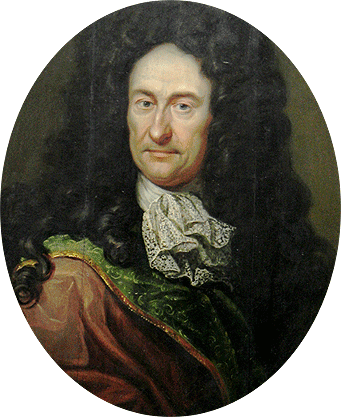 |
| Leibniz |
"The diversity of Leibniz’s interests and undertakings is dizzying. How are we to make sense of a man who contributed prominently to so many fields, including both religion and science? In our day, it is common to think especially of religion and science as either pulling in opposing directions in their respective understandings of the world, or as parallel but different domains. How did they hang together for Leibniz?"The Optimistic Science of Leibniz - The New Atlantis
Congratulations Graduates!

Cory Clark, Philosophy Major
Ryan Frye, Philosophy Major, Phi Sigma Tau Honors Society
Jennifer Greenwell, Philosophy Major
Marc Kennedy, Philosophy Major, Phi Sigma Tau Honors Society
Ashley Poe, Philosophy Major, Phi Sigma Tau Honors Society
William Wethington, Philosophy Major
Jason Block, Philosophy minor
Zachariah Casey, Philosophy minor
Brock Larkins, Philosophy minor
Adam Riser, Philosophy minor
Max Roberts, Philosophy minor
Mandy Turner, Philosophy minor, Phi Sigma Tau Honors Society
Samantha Lewis, Philosophy Focus
Zachary Thompson, Philosophy Focus
Andrew Gilbert, Religious Studies Minor
Adam Howard, Religious Studies Minor
Kevin Patton, Religious Studies Focus
Rosetta discovers water?
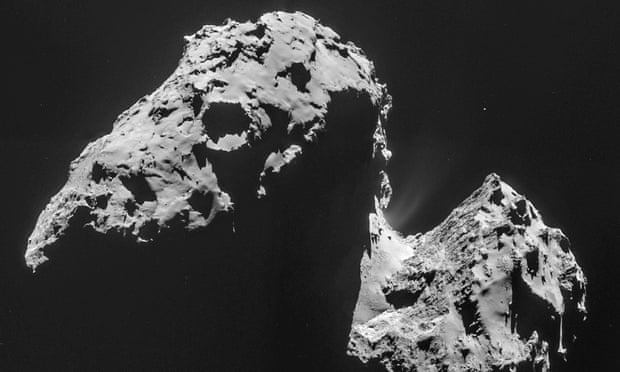
Rosetta discovers water on comet 67p like nothing on Earth | Science | The Guardian
Subscribe to:
Posts (Atom)