- Nicollette Carmack, Philosophy Major, Academic Excellence in Philosophy Award, Phi Sigma Tau
- Jonathan Cordova, Philosophy Major, Accomplished Student In Philosophy Award
- Jim Fletcher, Philosophy Major, Religious Studies Minor, Outstanding Student in Religious Studies Award
- Jared Laughlin, Philosophy Major
- Maxwell Spangler, Philosophy Major
- Samuel McMillin, Philosophy Minor
- Alex Deters, Religious Studies Minor
Wednesday, April 29, 2015
Congratulations Graduates!
Congratulations to all our philosophy and religious studies students who are graduating this semester.

Monday, April 27, 2015
Nigel Warburton –Cosmopolitanism

It’s not just me, you and everyone we know. Citizens of the world have moral obligations to a wider circle of humanity.Nigel Warburton –Cosmopolitanism
Sunday, April 26, 2015
Lesser-Known Trolley Problem Variations.

Test your moral intuitions against these variations of the famous Trolley Problem. Here's one:
You can find yet another variation here.
There’s an out of control trolley speeding towards Immanuel Kant. You have the ability to pull a lever and change the trolley’s path so it hits Jeremy Bentham instead. Jeremy Bentham clutches the only existing copy of Kant’s Groundwork of the Metaphysic of Morals. Kant holds the only existing copy of Bentham’s The Principles of Morals and Legislation. Both of them are shouting at you that they have recently started to reconsider their ethical stances.McSweeney’s Internet Tendency: Lesser-Known Trolley Problem Variations.
You can find yet another variation here.
Friday, April 10, 2015
Philosophy of Markets

Economic models make simplifying assumptions about human agency and about social interaction. If one only used these models to answer the questions they are supposed to answer, taking into account their methodological limitations, there wouldn’t be any problem. But often they are used to make much wider claims. For example, predications are based on a theoretical model, but with insufficient discussion of whether the assumptions of the model also hold in reality. Along the way, one often finds that normative judgments sneak in, but without being made explicit. Thus, one cannot even ask critical questions, for example whether certain theories serve the interests of certain social groups – whether they are ideologies in the classical sense.Philosophy of Markets » 3:AM Magazine
Thursday, April 09, 2015
Philosophers' Cafe Topic: Nothing!

Philosophers' Cafe
April 23 from 3:00-4:30
GH 316
Philosophers' Cafe
Wednesday, April 08, 2015
Kierkegaard on the Individual vs. the Crowd, Why We Conform, and the Power of the Minority
Kierkegaard on the Individual vs. the Crowd, Why We Conform, and the Power of the Minority | Brain PickingsTruth always rests with the minority … because the minority is generally formed by those who really have an opinion, while the strength of a majority is illusory, formed by the gangs who have no opinion.

Sunday, April 05, 2015
Philosophy from the Zettabyte

The best philosophy (the one you find on the crests of the sine wave) has always combined a high degree of control with very powerful ideas. And this is what I hope a post-analytic-continental divide perspective may regain. It is certainly what we need today. As for the philosophy of information, I can only hope that it will mature into a first philosophy. Anything less and it will have failed in its task of providing us with the powerful and controlled ideas that we need to shape and make sense of the human project in the twenty-first century.
Philosophy from the Zettabyte » 3:AM Magazine
Thursday, April 02, 2015
CALL FOR PAPERS
All students of Sociology, Anthropology, or Philosophy (majors, minors, and focus) are invited to submit a paper for the 2015 Departmental Essay Contest. The authors of the selected papers will each be awarded a $200 prize; the winning authors will be expected to submit their papers to one of the Kentucky professional societies for the discipline (e.g., KPA, KAS, or ASK, see descriptions below). Students who attend professional meetings may receive up to an additional $100 to support conference attendance and fees for the 2015-2016 meetings.
Paper Guidelines:
Submissions on any philosophical, sociological or anthropological topic are welcome. Students can submit up to two papers for consideration. Papers should be written for a multi-disciplinary audience and will be evaluated by faculty in all three disciplines in the Department. Papers should not exceed 3,000 words, they should be formatted according to discipline standards (e.g., ASA, MLA, AAA), and should be prepared for blind review. Include the following information as a cover page in a file separate from the paper. Name the cover file as “Cover_LastName_Discipline.” Name the paper the same as the title:
1) Title of paper
2) 150-word abstract
3) Author’s name
4) Author’s major
5) Author’s email address and a phone contact
Papers should be emailed as two attachments—cover page and paper—in Word to Dr. Sharyn Jones (joness33@nku.edu) on or before April 15th with Departmental Essay Contest in the subject line.
Examples of specifics for different KY professional societies, see the following websites:
**If you find another conference you would like to present at (that is not listed below), please have it approved by the Department Chair or the Program Coordinator.
Kentucky Philosophical Association (KPA): http://kentuckyphilosophy.blogspot.com/
--Papers for the annual meeting are generally due mid-February 2016.
Tuesday, March 31, 2015
John Rawls

What Rawls was therefore after was a simple, economical and polemical way to show people how their societies were unfair and what they might do about it – in ways that could cut through the debate and touch people’s hearts as well as minds (for he knew that emotion mattered a lot in politics).The Great Philosophers: John Rawls | Philosophers' Mail
Tuesday, March 10, 2015
How to Criticize with Kindness
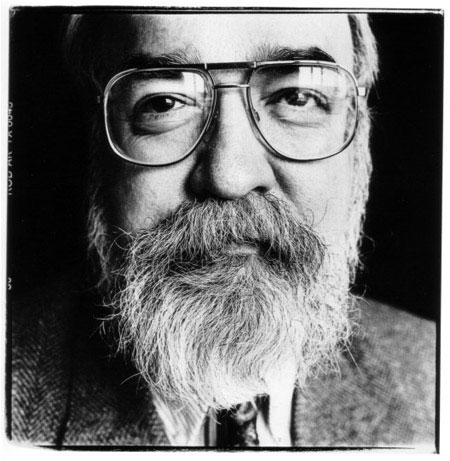
“In disputes upon moral or scientific points,” Arthur Martine counseled in his magnificent 1866 guide to the art of conversation, “let your aim be to come at truth, not to conquer your opponent. So you never shall be at a loss in losing the argument, and gaining a new discovery.” Of course, this isn’t what happens most of the time when we argue, both online and off, but especially when we deploy the artillery of our righteousness from behind the comfortable shield of the keyboard. That form of “criticism” — which is really a menace of reacting rather than responding — is worthy of Mark Twain’s memorable remark that “the critic’s symbol should be the tumble-bug: he deposits his egg in somebody else’s dung, otherwise he could not hatch it.” But it needn’t be this way — there are ways to be critical while remaining charitable, of aiming not to “conquer” but to “come at truth,” not to be right at all costs but to understand and advance the collective understanding.Dan Dennett talks about how to construct healthy criticism, based on his book Intuition Pumps and Other Tools for Thinking.
How to Criticize with Kindness: Philosopher Daniel Dennett on the Four Steps to Arguing Intelligently | Brain Pickings
Sunday, March 08, 2015
The social contract theory according to Socrates

This essay aims to trace the idea of the social contract in the western tradition as far back as possible, in which we turn back looking at Socrates’ trial. Of course, the major works on ‘social contract theory’ were written in closer proximity to our age, initiated by Hobbes’s “Leviathan,” Locke’s “Two Treatises on Government,” Rousseau’s “The Social Contract,” and Montesquieu’s “The Spirit of Laws.” However, there is a great deal of understanding found in Plato’s dialogues, particularly in Euthyphro, Apology, and Crito. Plato also writes extensively related to this topic in the “Republic” (especially, Book II) and the “Laws.”The social contract theory according to Socrates » 3:AM Magazine
Friday, March 06, 2015
Constructive Thinking
Critical thinking is actually just the first step in a larger process that we might want to call constructive thinking. Rest assured, this is not just wordplay. Critical thinking represents the highly valuable inquiry and interrogation prerequisite to problem identification; it involves the analysis of an argument's merits and faults. It is the process of judging, approving or disapproving. Liberal arts colleges encourage students to ask lots of questions. Through questions, students unravel or deconstruct an argument in order to access its utility. While none of this is inherently negative, it too often becomes routinely condemnatory. It can also breed intellectual laziness; the job of taking something apart is far easier than the job of putting it back together again. The identification of problems made possible by critical thinking is useful only if it gives rise to the problem solving of constructive thinking. The desired endgame is problem solving, not critical thinking for its own sake.Liberal arts colleges should focus on how they help students learn 'constructive thinking'
Top 10 Living Philosophers to Read Today

And there are lots of younger philosophers doing great work worth reading. Many of them--more than 1-in-10--are women.
Thursday, March 05, 2015
Walter Sinnott-Armstrong on Moral Psychology
Check out this podcast on moral psychology.
Nigel Warburton interviews Walter Sinnott-Armstrong about moral psychology for this episode of the Philosophy Bites podcast. Is recent psychological research relevant to moral philosophy? If so, what exactly can it provide?"philosophy bites: Walter Sinnott-Armstrong on Moral Psychology
Monday, March 02, 2015
Why Our Children Don't Think There Are Moral Facts
We can do better. Our children deserve a consistent intellectual foundation. Facts are things that are true. Opinions are things we believe. Some of our beliefs are true. Others are not. Some of our beliefs are backed by evidence. Others are not. Value claims are like any other claims: either true or false, evidenced or not. The hard work lies not in recognizing that at least some moral claims are true but in carefully thinking through our evidence for which of the many competing moral claims is correct. That’s a hard thing to do. But we can’t sidestep the responsibilities that come with being human just because it’s hard.Why Our Children Don't Think There Are Moral Facts - NYTimes.com
Sunday, February 15, 2015
History from the Early Modern Philosophers
An interview with the philosopher Dan Garber.
Daniel Garber knows philosophy makes some parents go silent and it’s broad enough to encompass everything worth while. He thinks about the history of seventeenth century philosophy, about what makes the early moderns modern, about the giants of the time and what we learn from studying the lesser known ones too, about the importance of Kant to our conception of the early moderns, about Leibniz, about contrasts between Leibniz and Descartes and Spinoza, about the metaphysical schemes of the time, about Descartes and Galileo, about Hobbes and Spinoza, Pascal’s wager, and about x-phi and comparing our present context with the early mods. This one wakes us up to the long years we’ve been travelling…History from the Early Modern Philosophers » 3:AM Magazine
Friday, February 06, 2015
Luciano Floridi on the Philosophy of Information
The Oxford Professor of Philosophy and Ethics of Information says methods for discussing the ethics of information technology have been latent in philosophy from its origins.Luciano Floridi on the Philosophy of Information | Five Books
Thursday, February 05, 2015
Stuart Kauffman on Free Will, God, ESP and Other Mysteries

Few living scientists are as ambitious in their choice of problems as Stuart Kauffman. He is a polymath, with a degree in medicine and training in biochemistry, genetics, physics, philosophy and other fields. He roams across disciplinary boundaries seeking answers to the riddles that obsess him. Why is reality so beautifully structured rather than being a chaotic mess? How probable was life? Is evolution enough to explain life’s origin and diversity? How does a brain make a mind? How do minds choose?Scientific Seeker Stuart Kauffman on Free Will, God, ESP and Other Mysteries
Tuesday, February 03, 2015
William Molyneux’s thought experiment

Optical connections: William Molyneux’s thought experiment A person, blind from birth, has learned to distinguish between a cube and a sphere by touch. On recovering their sight, would they then be able to distinguish between these objects without first touching them? David Baker investigates.
Optical connections: William Molyneux’s thought experiment
Sunday, February 01, 2015
Philosophy Pays

I think, therefore I … make money! Graduates with philosophy degrees have "higher earnings potential than many other arts and humanities-related fields," said TheRichest. Payscale reports midcareer median salaries are $84,000 for your modern day Kant or Descartes. Why? Well, let's be logical. Which is exactly what philosophy programs require of students … logic. Thinking is hard, it requires analysis, and those who can do it well can get a good job … which is a good philosophy to have.
A philosophy degree earns more than an accounting degree | Top/Best/Most - Yahoo Finance
Subscribe to:
Posts (Atom)