
Who Studies Philosophy? - The American Philosophical Association

At a time when more people than ever are getting to know about Alan Turing through “The Imitation Game”, it seems fitting to contribute to this growing public interest in his scientific and political legacy, by exploring his ground-breaking ideas, and the tumultuous happenings of his life, through the unique lens of academic philosophy. Although Turing never described himself as aphilosopher, his three major contributions to the history of ideas: The Turing Test, The Turing Machine and The Church-Turing Thesis, have been of great interest to scholars working in the philosophy of mind and computing. His 1950 paper, “Computing Machinery and Intelligence”, which was published in the prestigious philosophical journal Mind, was especially successful in capturing the fascination of analytic philosophers.The Computational Theory of Mind: Alan Turing & The Cartesian Challenge : The Critique

 |
| Andy Clark and David Chalmers |

Dennett excerpts seven tools for thinking from the new book. Having taught critical thinking and argumentation to undergraduates for years, I can say that his advice is pretty much standard fare of critical reasoning. But Dennett’s formulations are uniquely—and bluntly—his own.Philosopher Daniel Dennett Presents Seven Tools For Critical Thinking | Open Culture
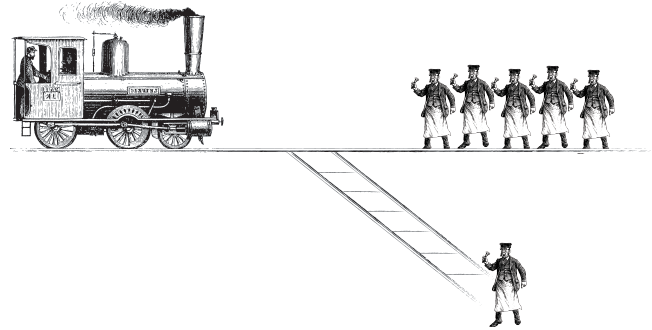
Sometimes, the best way to illustrate a complicated philosophical concept is by framing it as a story or situation. Here are nine such thought experiments with downright disturbing implications.9 Philosophical Thought Experiments That Will Keep You Up at Night
 |
| Leibniz |
"The diversity of Leibniz’s interests and undertakings is dizzying. How are we to make sense of a man who contributed prominently to so many fields, including both religion and science? In our day, it is common to think especially of religion and science as either pulling in opposing directions in their respective understandings of the world, or as parallel but different domains. How did they hang together for Leibniz?"The Optimistic Science of Leibniz - The New Atlantis


 |
| Margaret Cuonzo |
The sorites is, to my mind, one of the deepest paradoxes out there and it provides a good example for understanding different ways to solve paradoxes. It is very deep because the premises of the paradox are close to certainly true, the reasoning is straightforward, and yet the conclusion is obviously false. In addition, the phenomenon that gives rise to the paradox, namely the vagueness of language, is so ubiquitous that the paradox has implications for much of our language. It tells us a lot about the concepts that we use everyday. The vast majority of our concepts, those like, baldness, wealth, strength, nearness, and so on, are vague. These admit of borderline cases and this can lead to outright contradiction. One fascinating thing about the sorites, then, is that it exposes how perfectly useful concepts lead to contradiction.3:AM Magazine by Richard Marshall


[Schopenhauer's] account of others as “fellow-sufferers” in “On the Sufferings of the World” encourages us to nurture a soft spot for even the most flawed individuals. That we are all condemned to the same Sisyphean fate ought to make us compassionate instead of competitive, work together instead of in isolation, and rely on one another instead of just ourselves. While Camus, in his well-known essay on the myth, has Sisyphus suffer his punishment alone, Schopenhauer’s account of redemption through shared misery might give Sisyphus, and us, neighbors to love. Still, Camus concludes, “One must imagine Sisyphus happy.” And if Camus can imagine happiness for a man sentenced to an eternity of meaningless toil, perhaps we can do the same for dissatisfied New Yorkers. Whether we are grieving the death of a friend or complaining about alternate-side-of-the-street parking, I think Schopenhauer was right to call us “companions in misery,” with the emphasis on companions.From New York Times, The Stone, Companions in Misery By Mariana Alessandri
‘Know thyself’ is a flimsy bargain-basement platitude, endlessly recycled but maddeningly empty. It skates the very existential question it pretends to address, the question that obsesses us: what is it to know oneself? The lesson of the identity detector is this: when we dig deep, beneath our memory traces and career ambitions and favourite authors and small talk, we find a constellation of moral capacities. This is what we should cultivate and burnish, if we want people to know who we really are.Morality is the key to personal identity – Nina Strohminger – Aeon
 |
| Essay Contest |


